
Get in touch Back to top
Residential

West Sussex House

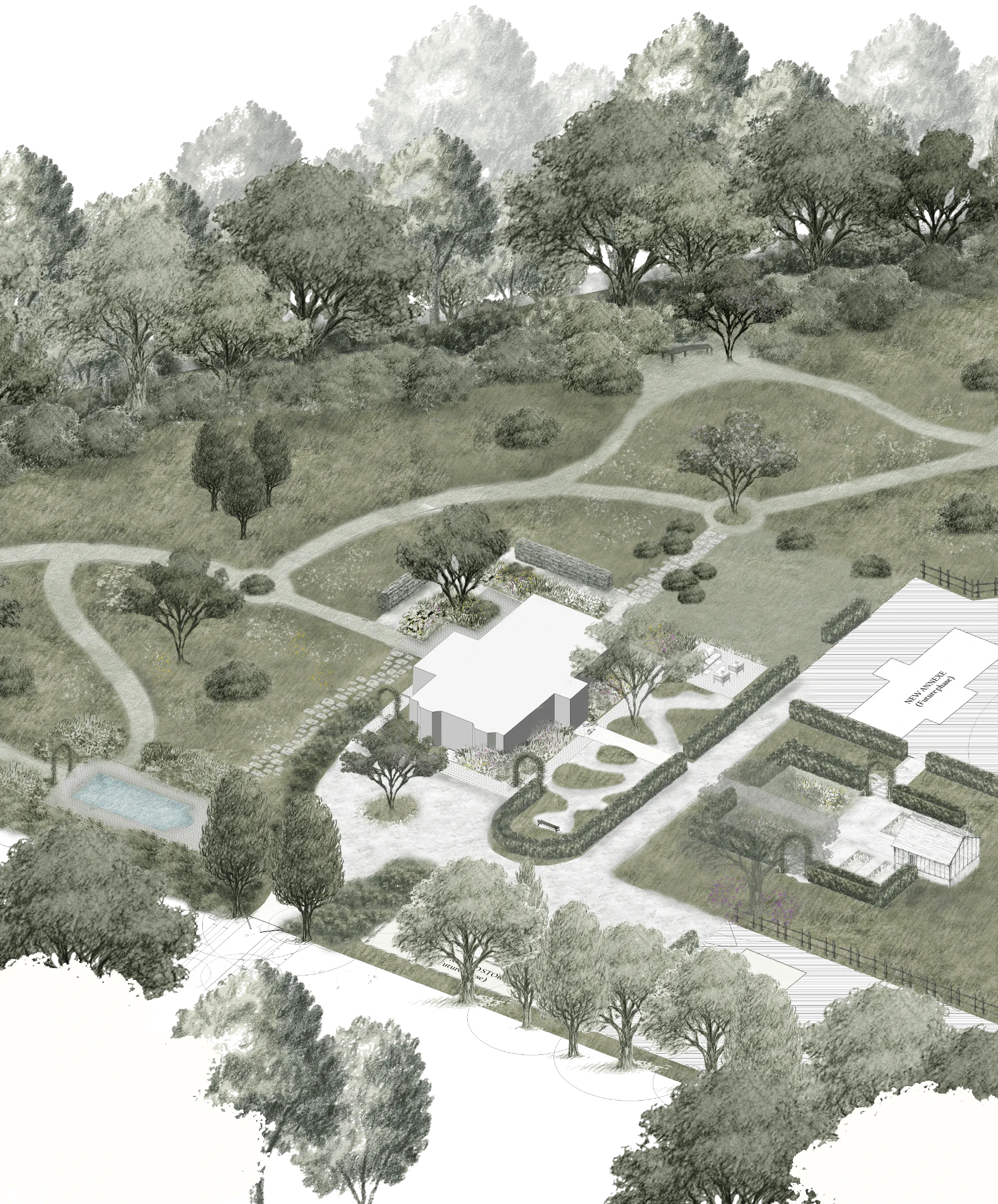
West Sussex House is a contemporary country garden shaped by history, landscape and movement. Set within the wooded farmland of West Sussex, the design unfolds as a series of connected spaces — from intimate, house-led gardens to expansive meadows beyond. Strong sightlines, generous planting and carefully placed destinations draw you through the site, while naturalistic meadows, structural trees and layered hedging create privacy, biodiversity and seasonal richness. The garden feels immersive yet restrained: a place designed for everyday living, quiet moments and long views, rooted firmly in its rural context.

YEAR
Ongoing
LOCATION
West Sussex
AREA
15,000 m²
TYPE
Residential
Aerial visualisation of West Sussex House — paths winding through meadows and woodland around the house, with hedged gardens and a pool

.

I. CONCEPT

The meadow design focuses on introducing strong structural elements within the site to create a more layered composition. These interventions will provide privacy and screening while helping to break up the open space and create a sense of enclosure that complements the existing trees. 
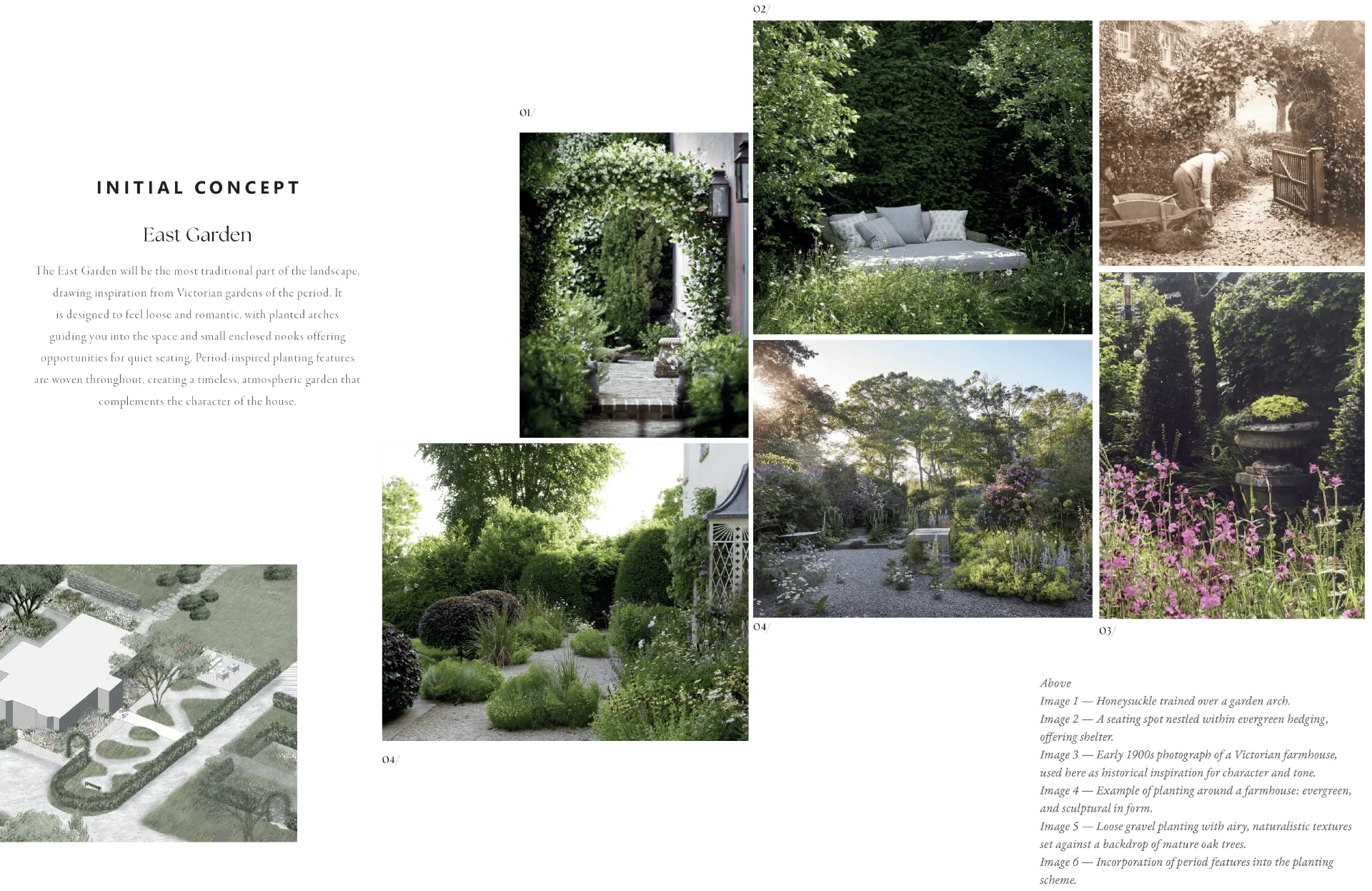
Initial concept board for the East Garden: an arch, a daybed, planting around a stone urn and Victorian reference photographs
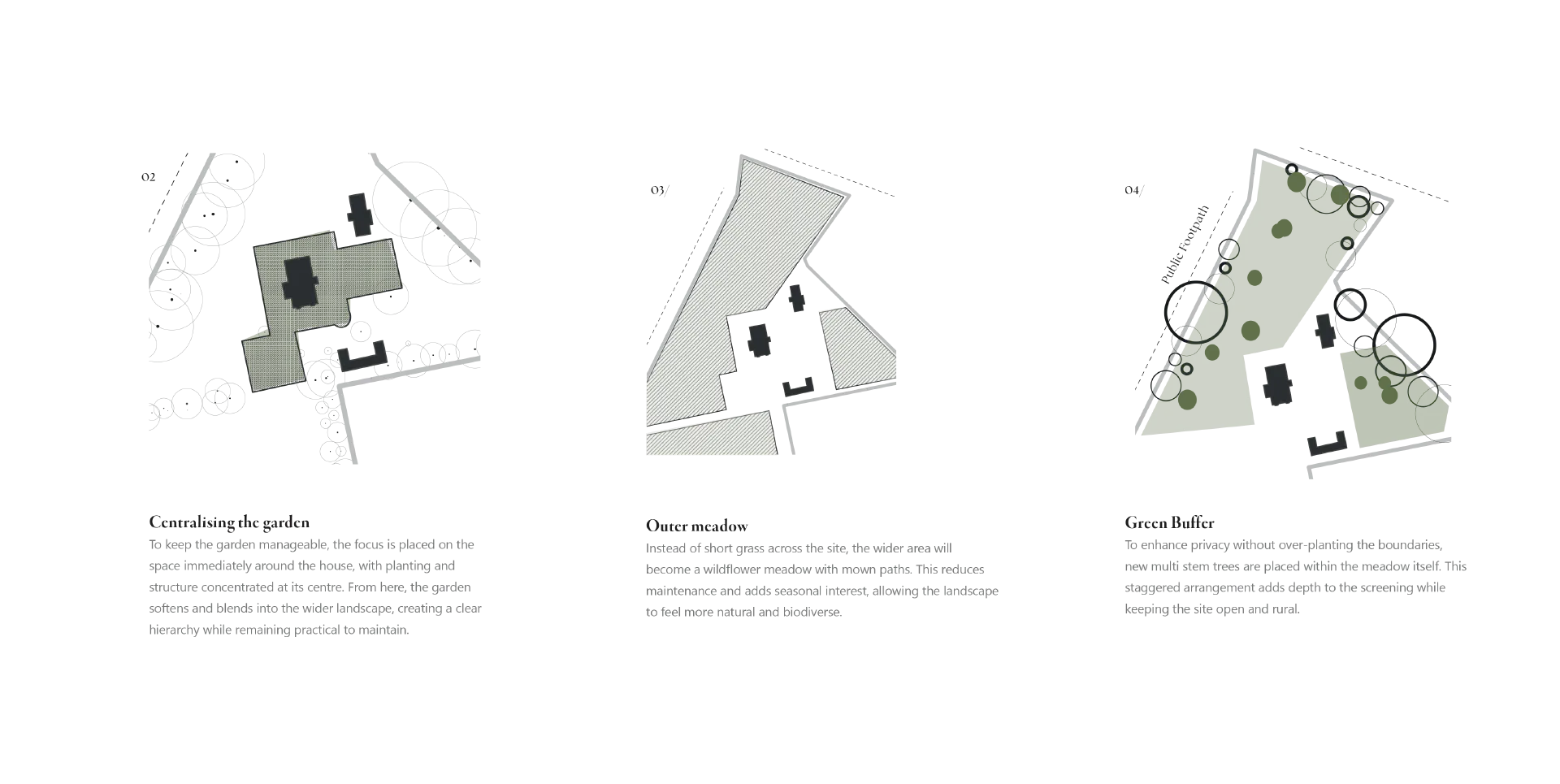
Concept diagrams: a garden contained around the house, an outer meadow, and a green buffer of trees along the boundaries

II. MATERIALS

The material palette was kept deliberately minimal and raw, taking cues from the surrounding English landscape and the downland beyond. Reclaimed brick from an old outbuilding on the site will be reused within the garden, carrying its age, weathering and imperfections into the new scheme. Reclaimed York stone was introduced in the same spirit, with individual stepping stones set through the lawn rather than forming heavy, continuous paths. This allowed the hard landscaping to begin to merge with the softer landscape around it, blurring edges and creating a more natural transition. The aim was for the materials to feel as though they belonged to the site already, sitting naturally within the landscape and continuing to soften and settle over time.
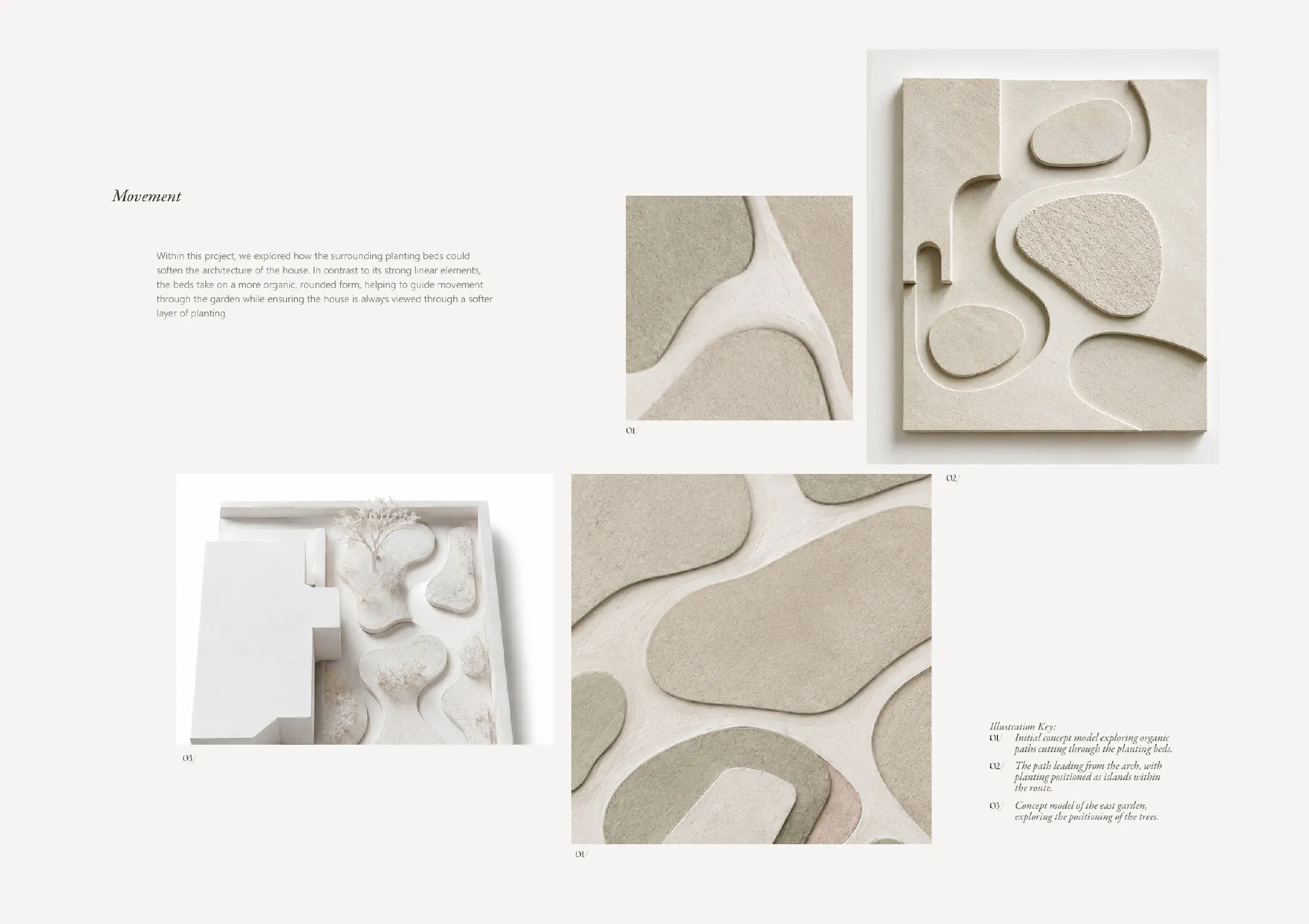

Design board on movement: plaster models of a winding path of organic stepping stones