Get in touch Back to top
Show Garden

Forgotten Forests Garden

Created for the Woodland Trust at RHS Chelsea Flower Show 2026, the Forgotten Forests Garden explored the restoration of the UK’s rare and vulnerable ancient woodlands, many of which were historically cleared and replanted with dense plantations of non-native conifers.

Awarded an RHS Gold Medal and Best All About Plants Garden, the design illustrated the gradual process of restoring Plantations on Ancient Woodland Sites (PAWS), showing how the careful removal of non-native conifers can allow surviving woodland species and ecosystems to recover.

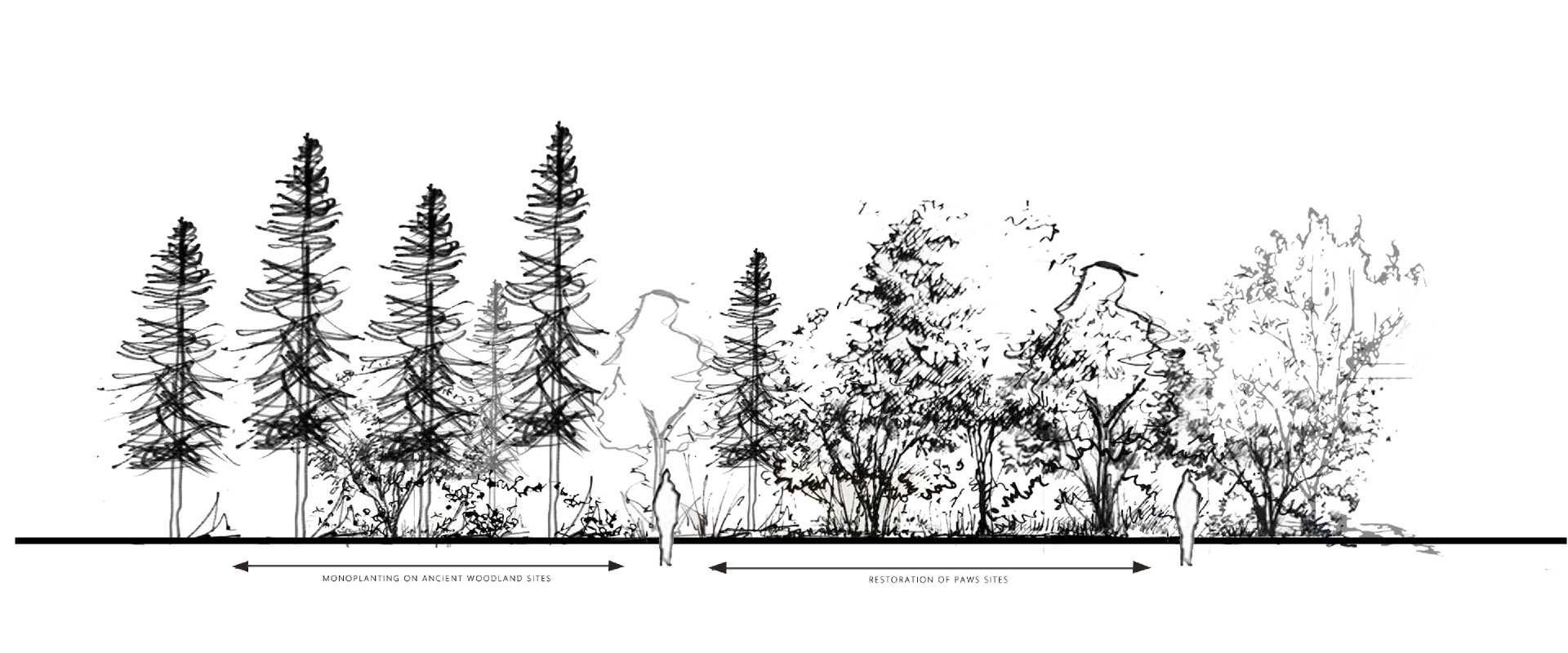
A transition through the garden saw regimented conifer planting gradually give way to a richer, more diverse native woodland. Rather than presenting restoration as an instant transformation, the garden captured a landscape in the process of renewal, where remnants of ancient woodland begin to re-emerge and regenerate.

The garden highlighted the extraordinary biodiversity held within ancient woodland and the important role these habitats play in storing carbon, supporting wildlife and preserving centuries of natural and cultural history.

To find out more about the Woodland Trust’s Forgotten Forests campaign, visit the Woodland Trust website.

YEAR
2026
LOCATION
RHS Chelsea Flower Show
CLIENT
Woodland Trust
COLLABORATORS
Project Giving Back, Hilliers, CJ Landscapes, Hortus Loci, Botanica Plant Nursery, Sarah Bryan
AWARDS
Best All About Plants Show Garden — RHS Chelsea Flower Show 2026
RHS Gold Medal — RHS Chelsea Flower Show 2026
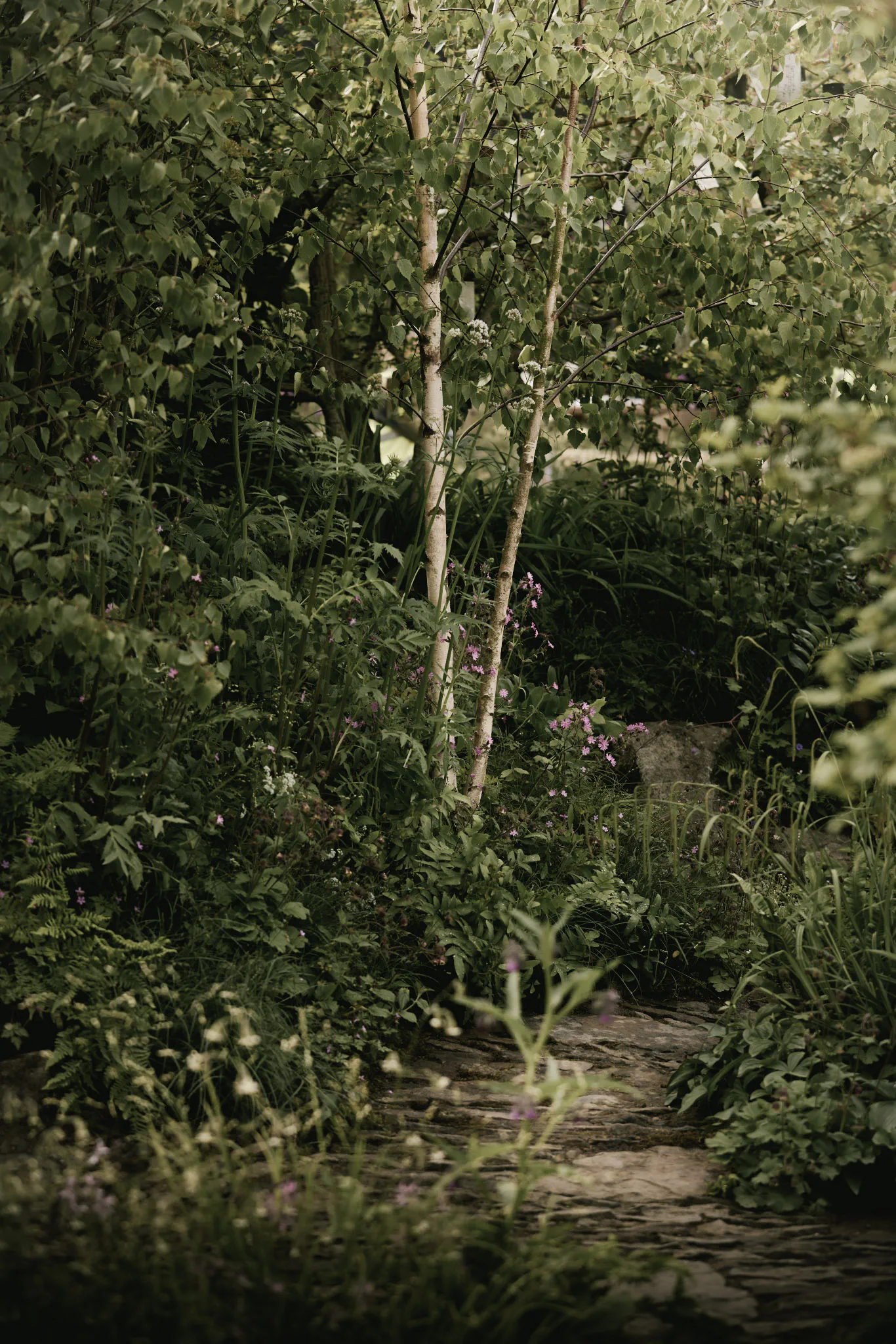
Forgotten Forests Garden at RHS Chelsea 2026 — a stone path winding beneath silver birches through dense native woodland planting

“The Woodland Trust’s inspiring and immersive garden is a vital reminder of what our irreplaceable ancient woodlands give us”
Dame Judi Dench
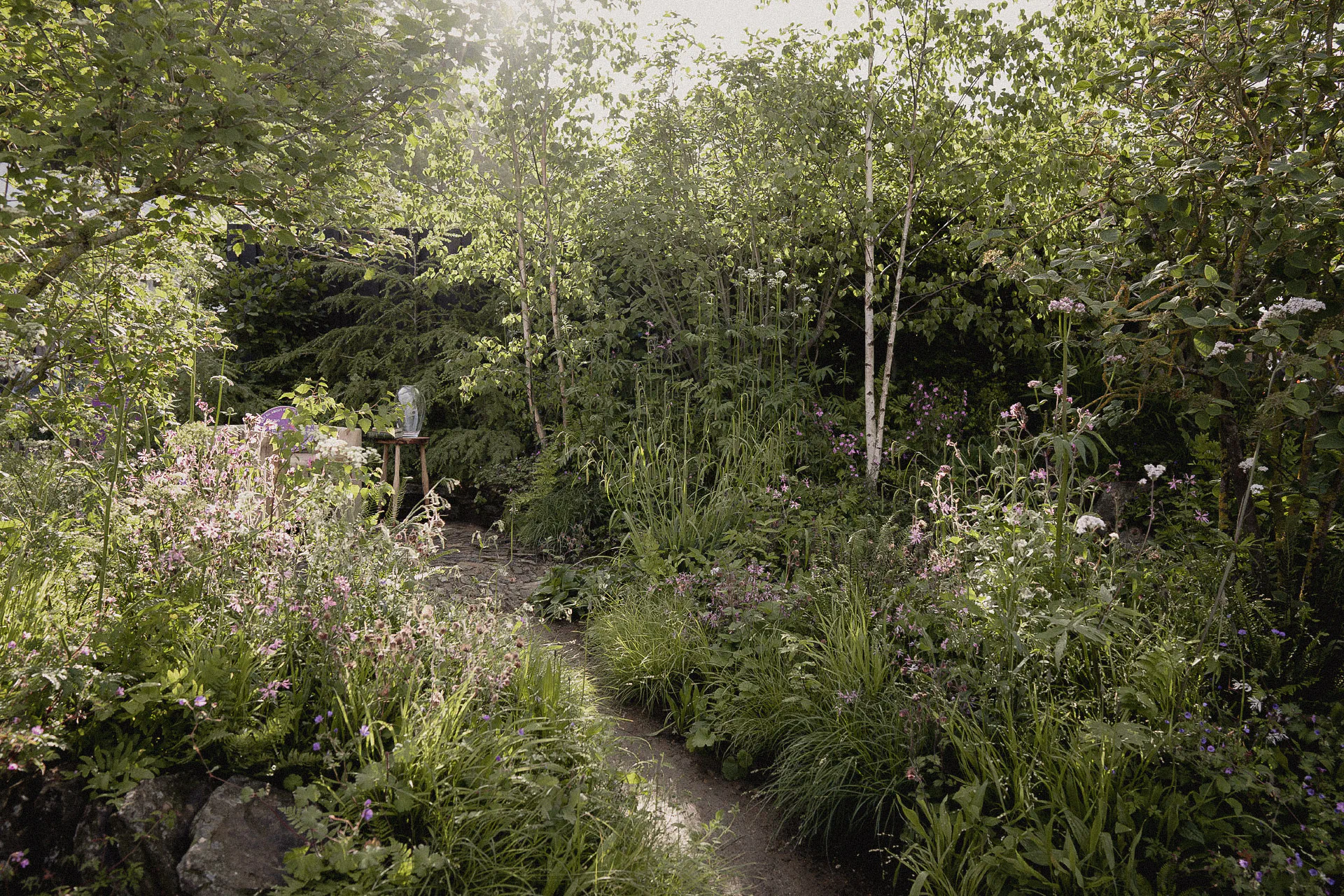
Path through the Forgotten Forests Garden in soft light, past silver birch, grasses, red campion and cow parsley
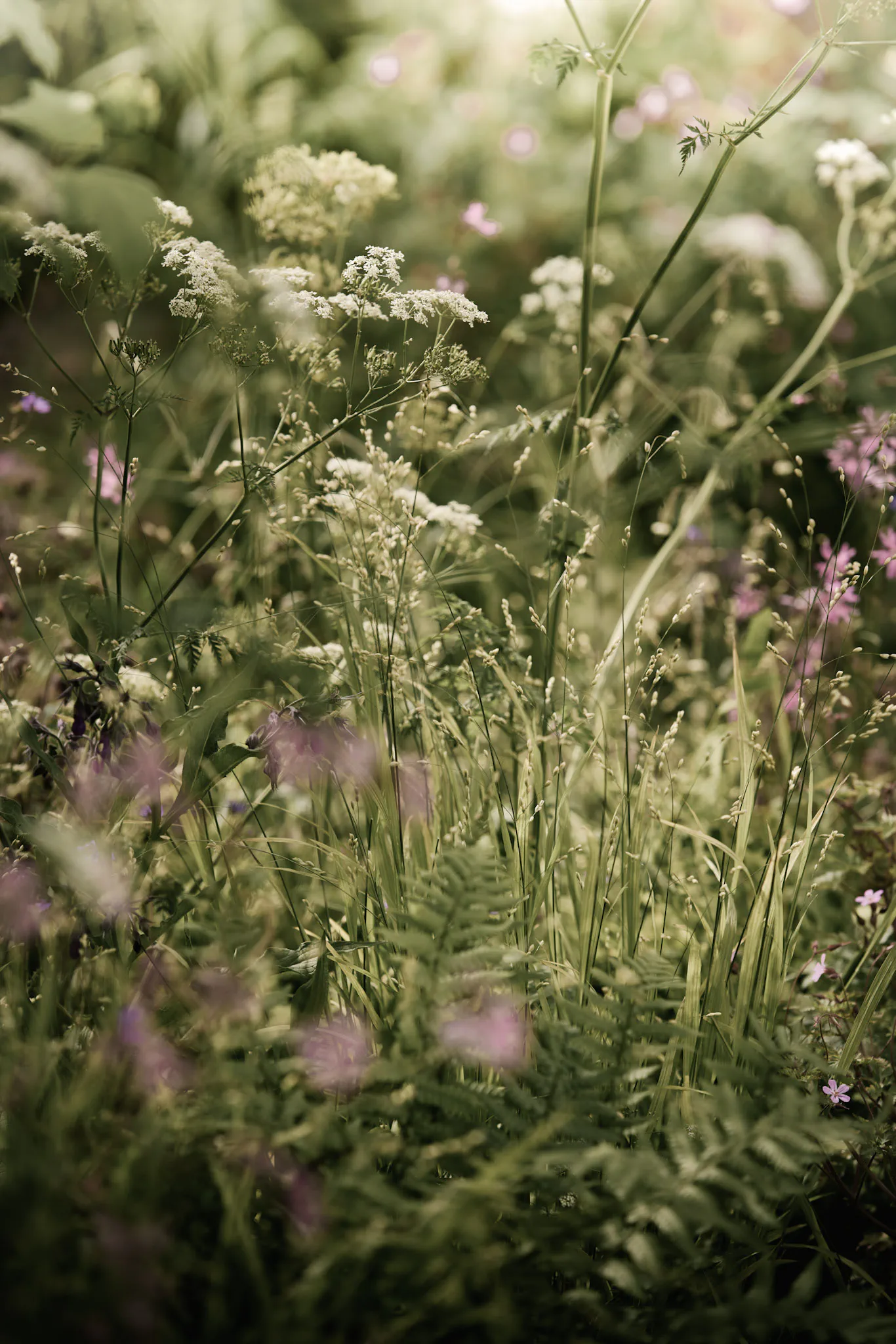
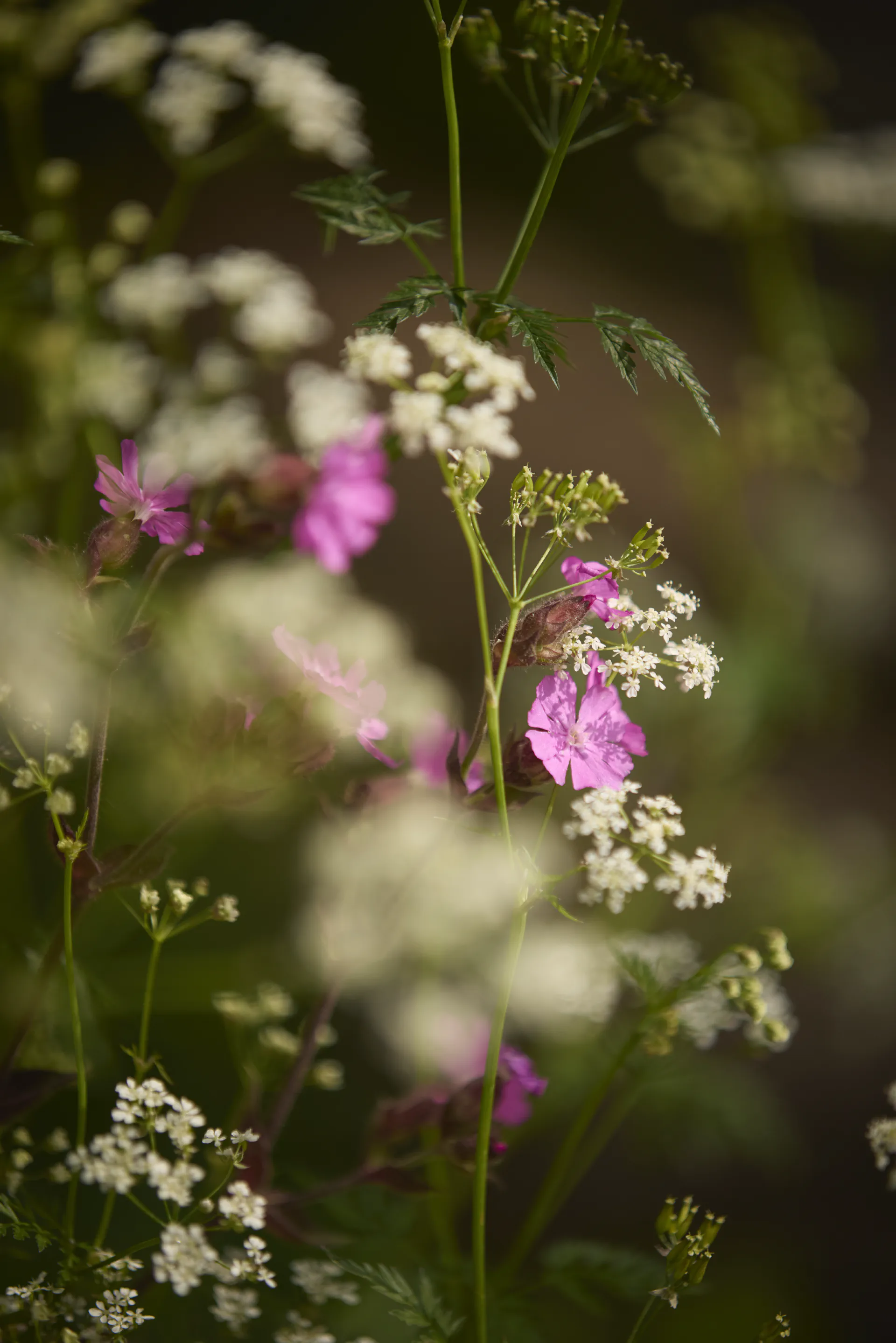
Cow parsley, grasses, ferns and red campion in the woodland planting
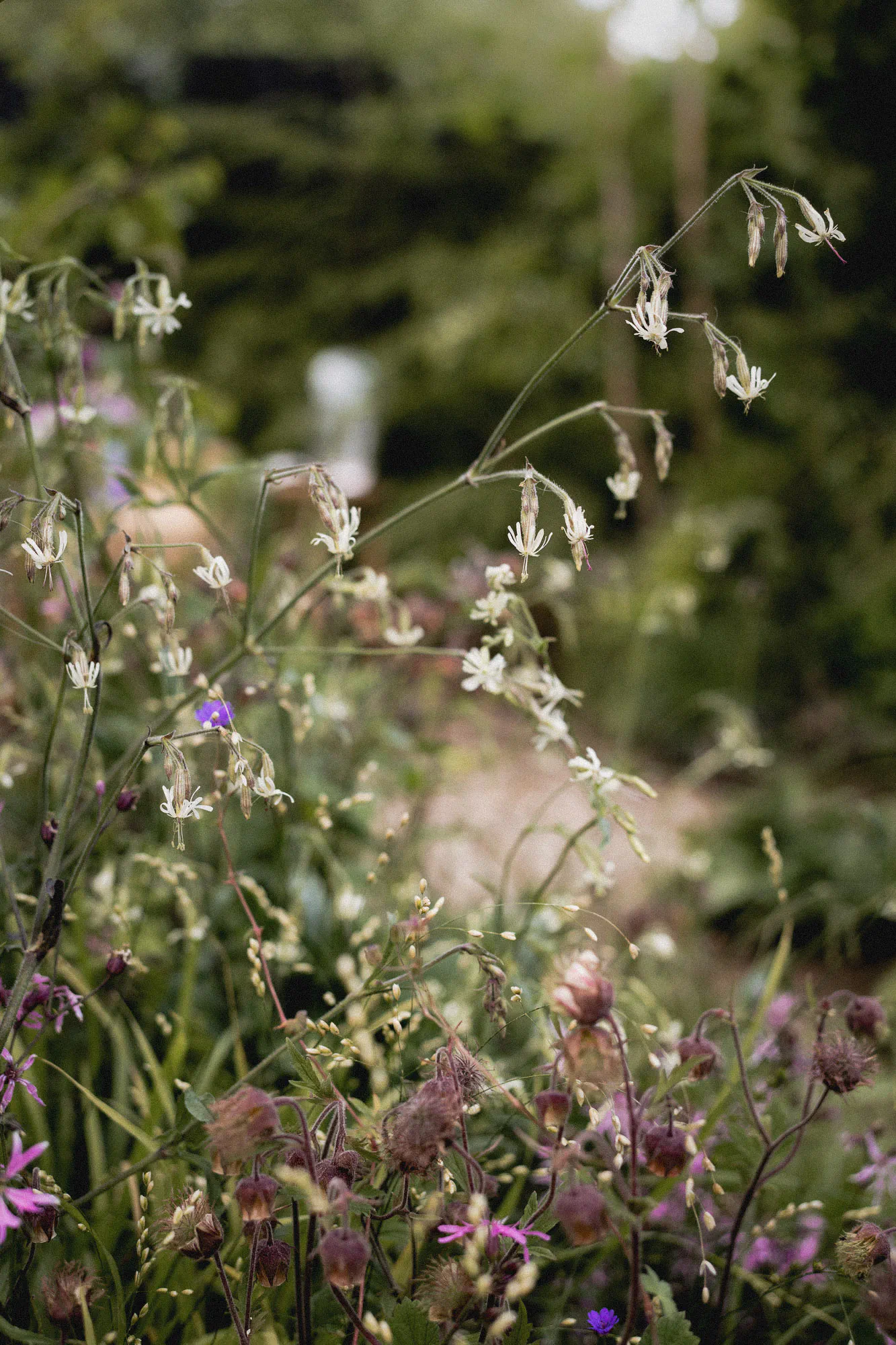
Nodding white campion and dusky water avens, with the garden path beyond

I. concept

Taking inspiration from the Woodland Trust’s Forgotten Forests campaign, the garden represented the gradual transition from monoculture conifer plantation back towards a regenerating native woodland.

The design explored the often-overlooked potential that remains beneath plantations established on ancient woodland sites. Although the original woodland may appear to have disappeared, fragments of its ecology can survive within the soil, seed bank and remaining woodland flora.

Throughout the garden, dense and regimented planting gradually opened into a lighter and increasingly diverse woodland community, reflecting the long-term restoration work undertaken by the Woodland Trust.

Ancient woods are among the UK’s richest habitats, supporting an extraordinary diversity of plants, fungi and wildlife while holding centuries of cultural and ecological history. The garden sought to draw attention to the fragility of these landscapes and the importance of protecting and restoring those that remain.

At its heart, Forgotten Forests offered a hopeful view of regeneration: demonstrating how, with careful management and time, damaged ancient woodland can begin to recover.

White concept model of the Forgotten Forests Garden, with miniature dry stone walls and dried plant stems
Section drawing of the garden: a conifer plantation on ancient woodland giving way to regenerating native woodland
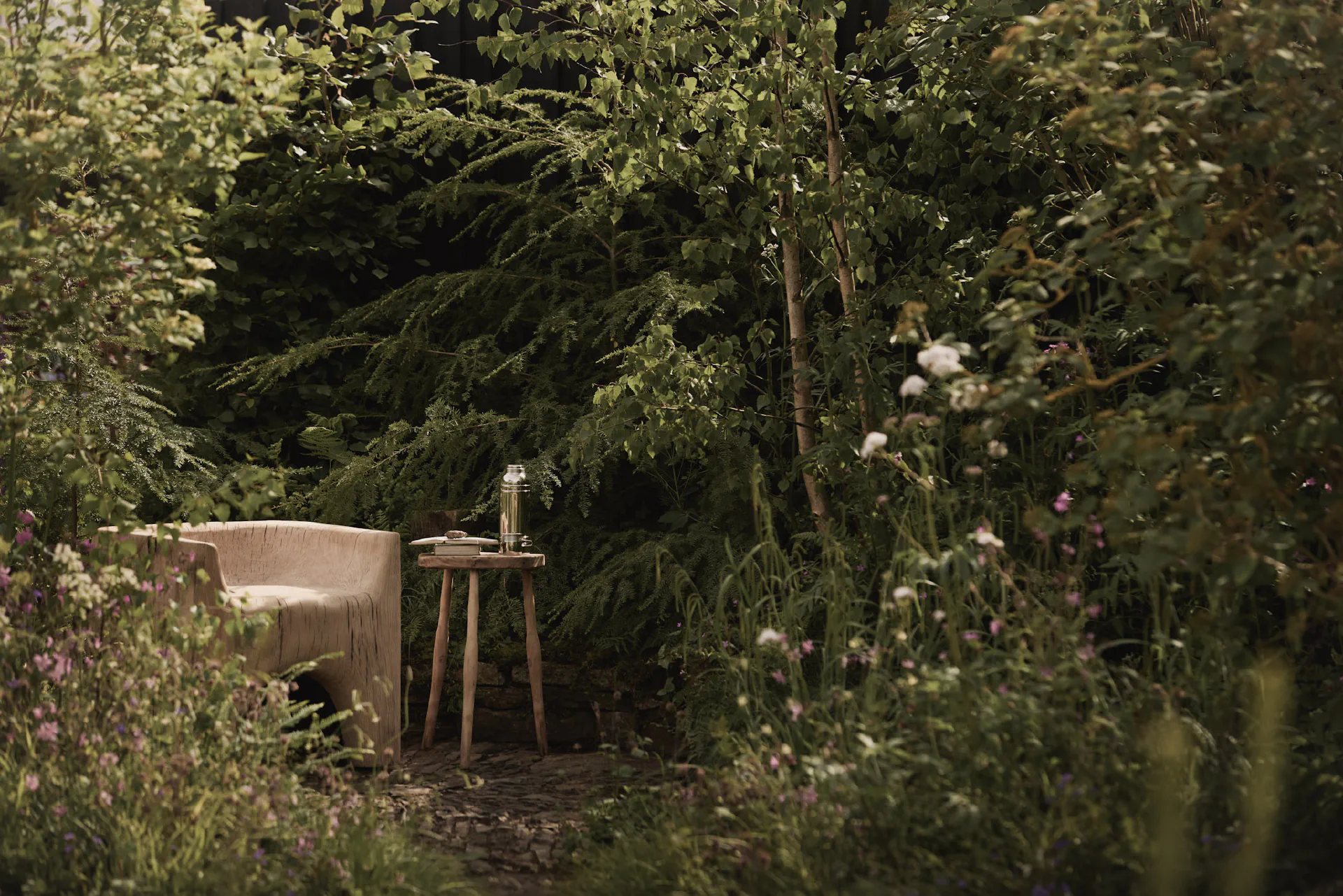
A pale upholstered chair and wooden side table in a clearing beneath conifers
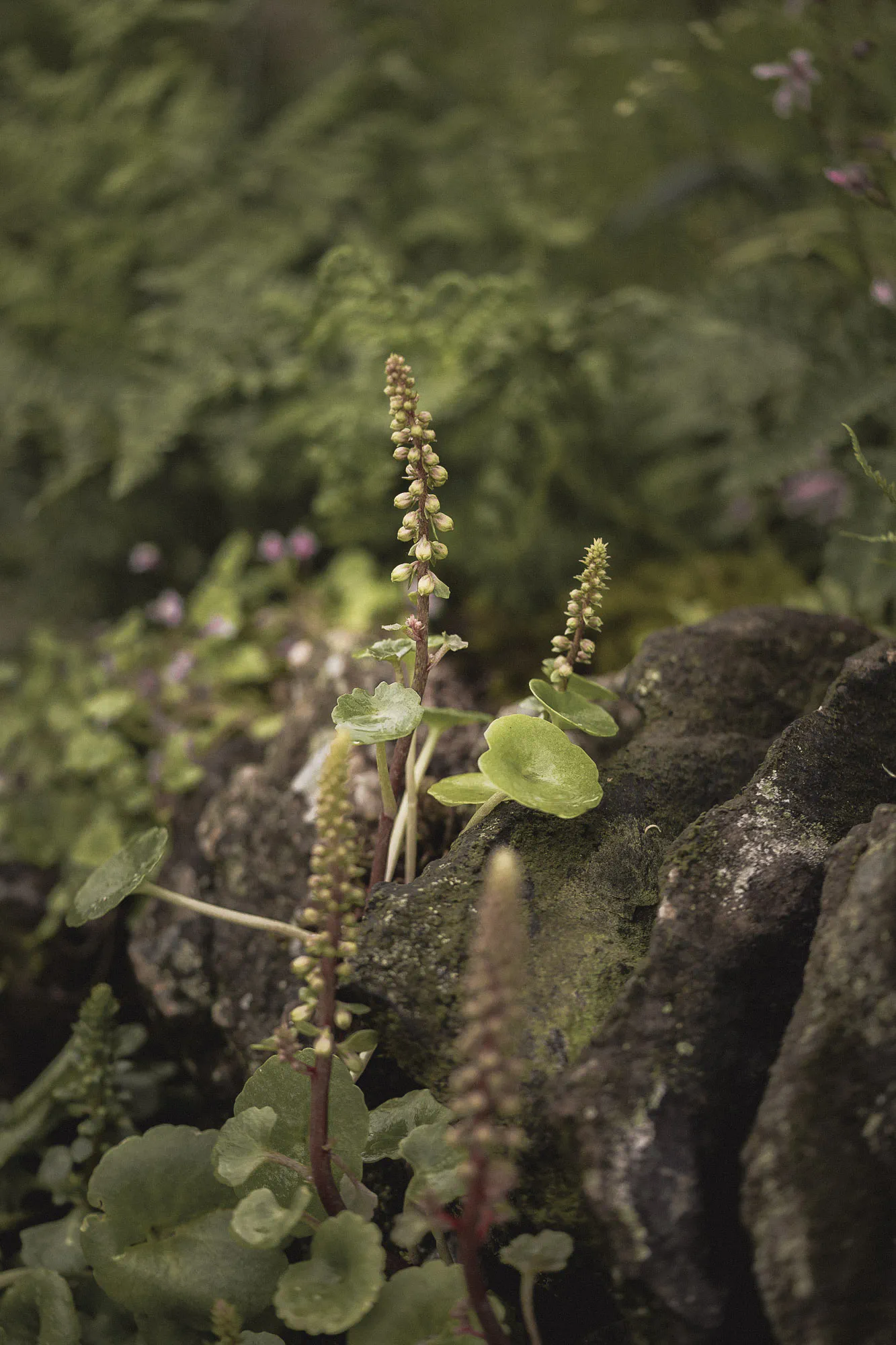
Navelwort growing from the joints of a mossy gritstone wall
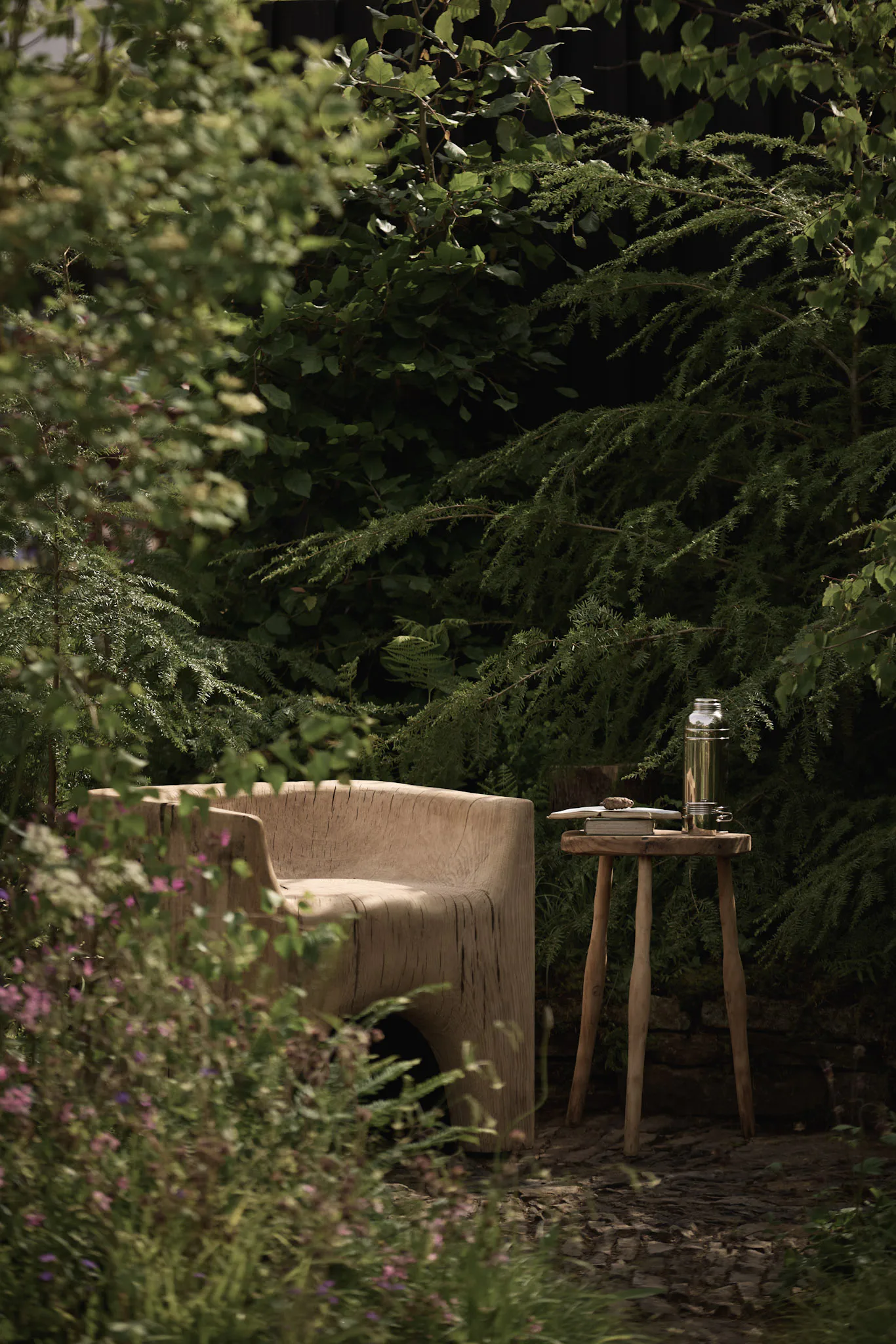
Carved timber chair and three-legged side table set among conifers and woodland planting
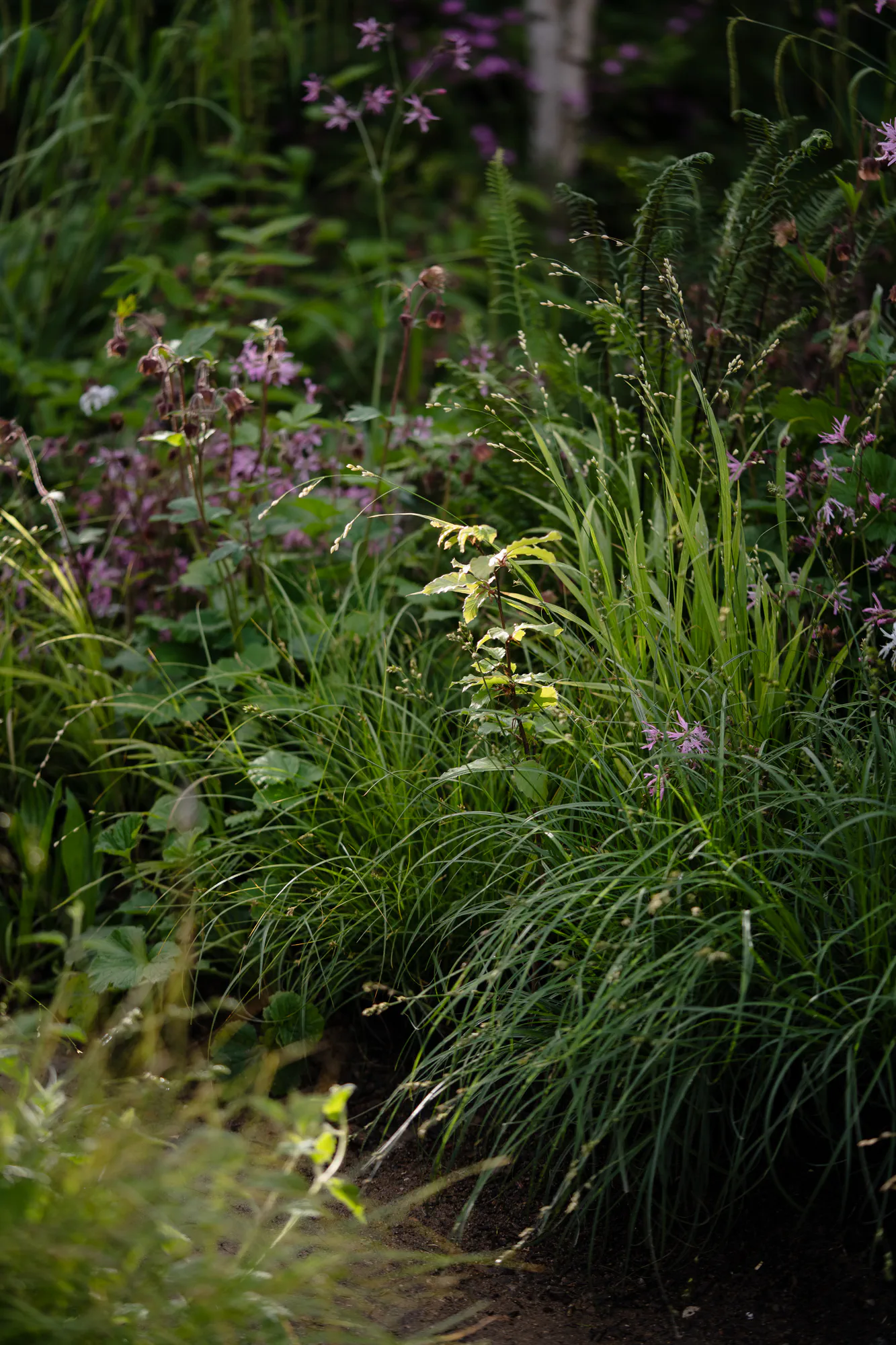
Sedges and grasses edging a woodland path, with red campion and ferns behind
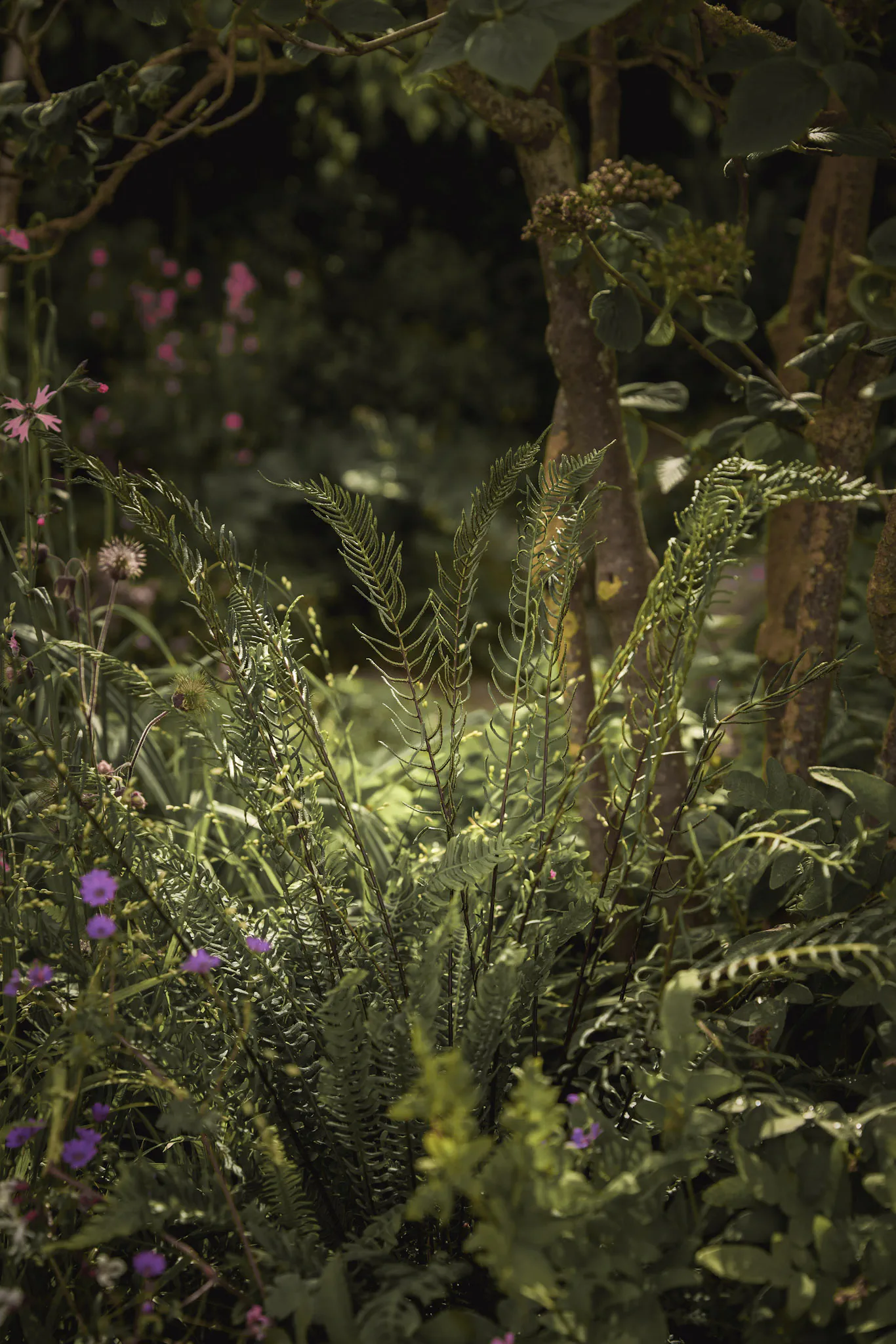
Ferns caught in low sunlight beneath trees, with purple cranesbill in the foreground

II. MATERIALS

A restrained palette of natural materials helped root the garden within the character of the British woodland landscape.

Gritstone from the Peak District formed a series of dry stone walls inspired by those traditionally found along woodland boundaries. The walls provided structure within the garden while allowing the surrounding ground to rise and fall naturally around them.

Rather than treating the stonework simply as a hard landscape element, the walls were designed as living structures. A planting matrix was designed to showcase native species emerging through joints and crevices, reflecting the way vegetation naturally colonises old walls, rock faces and woodland edges.
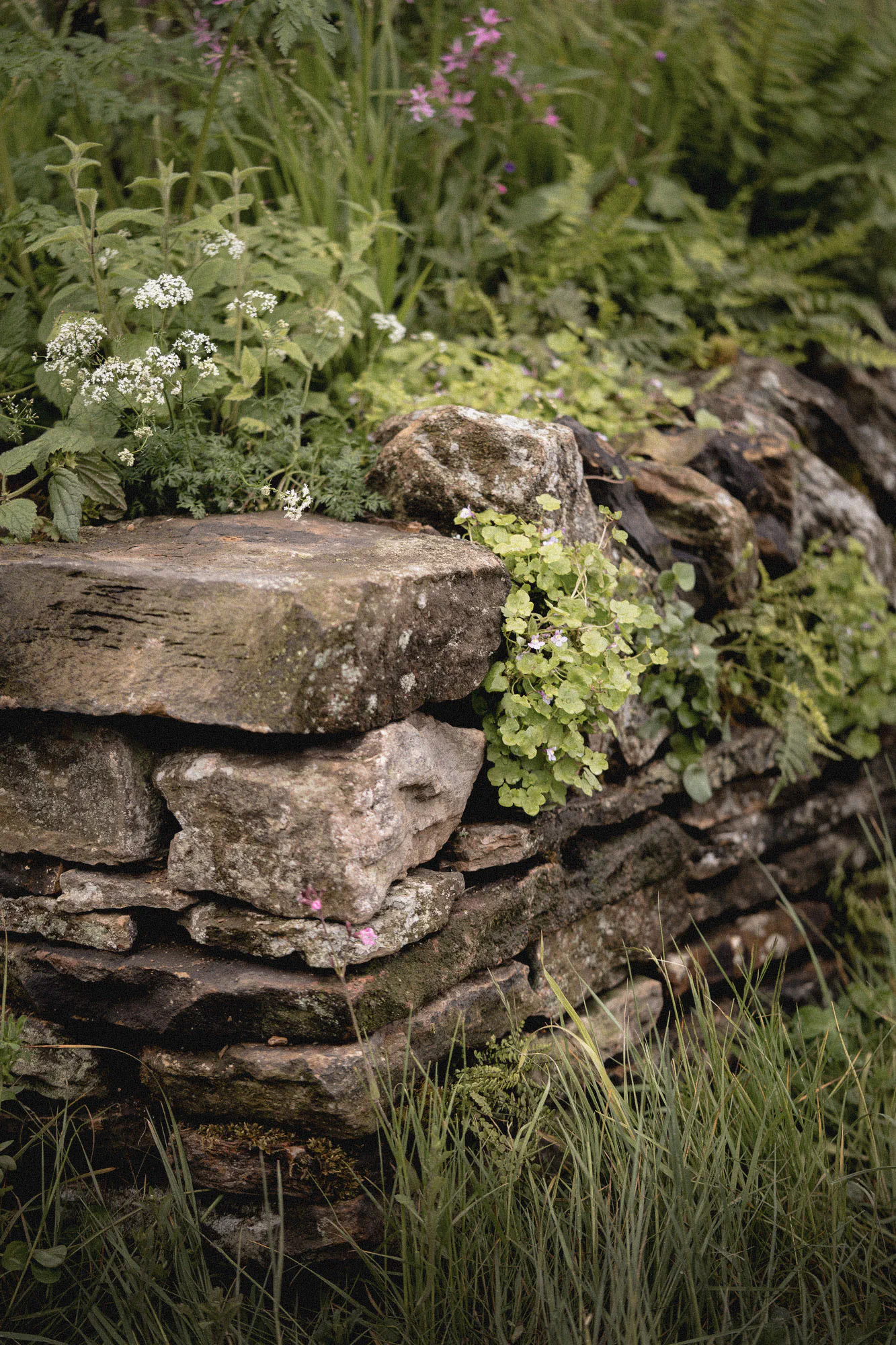
Gritstone dry stone wall topped with cow parsley, red campion and trailing woodland plants
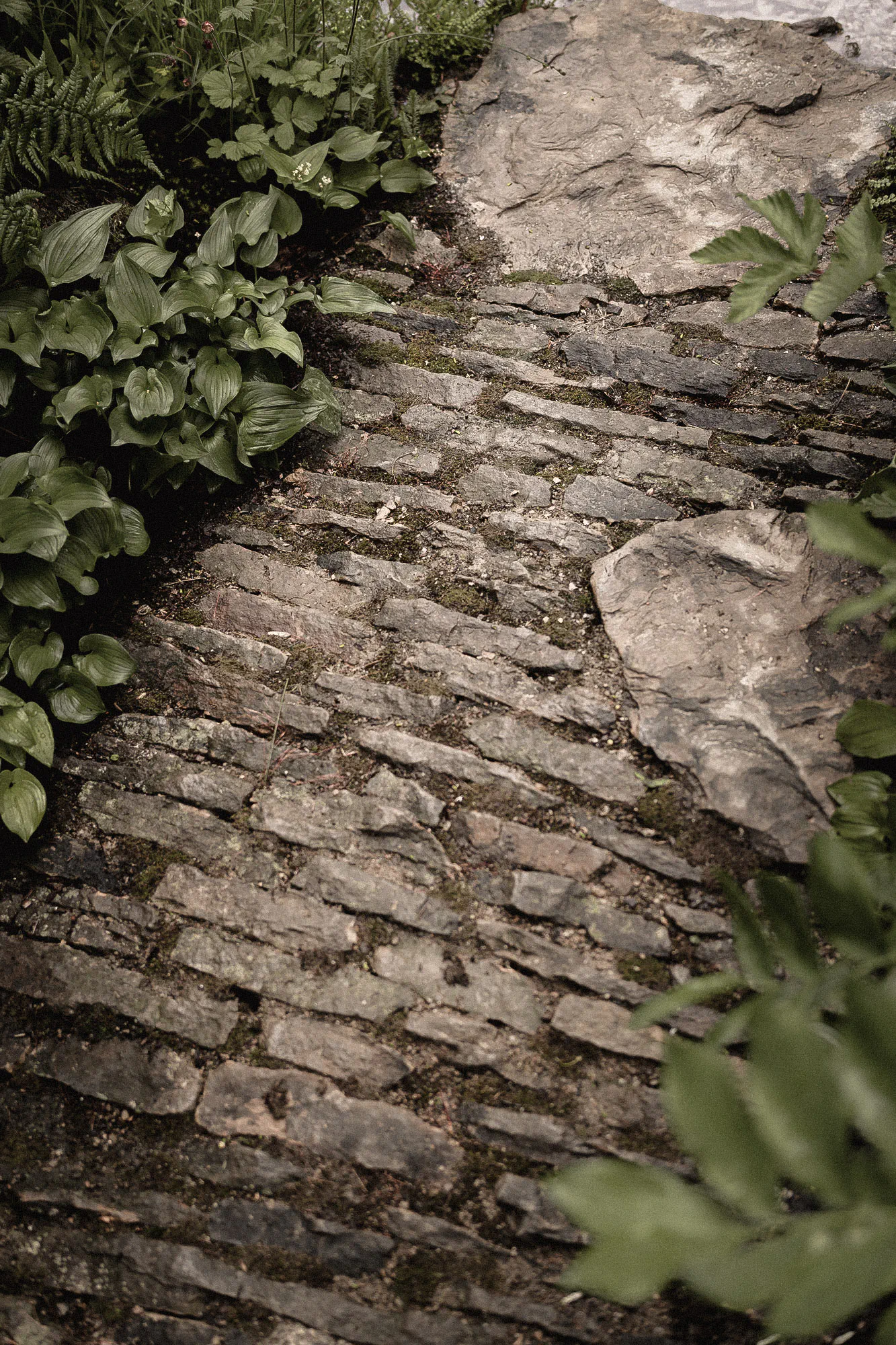
Path of gritstone laid on edge, bordered by ferns and woodland ground cover
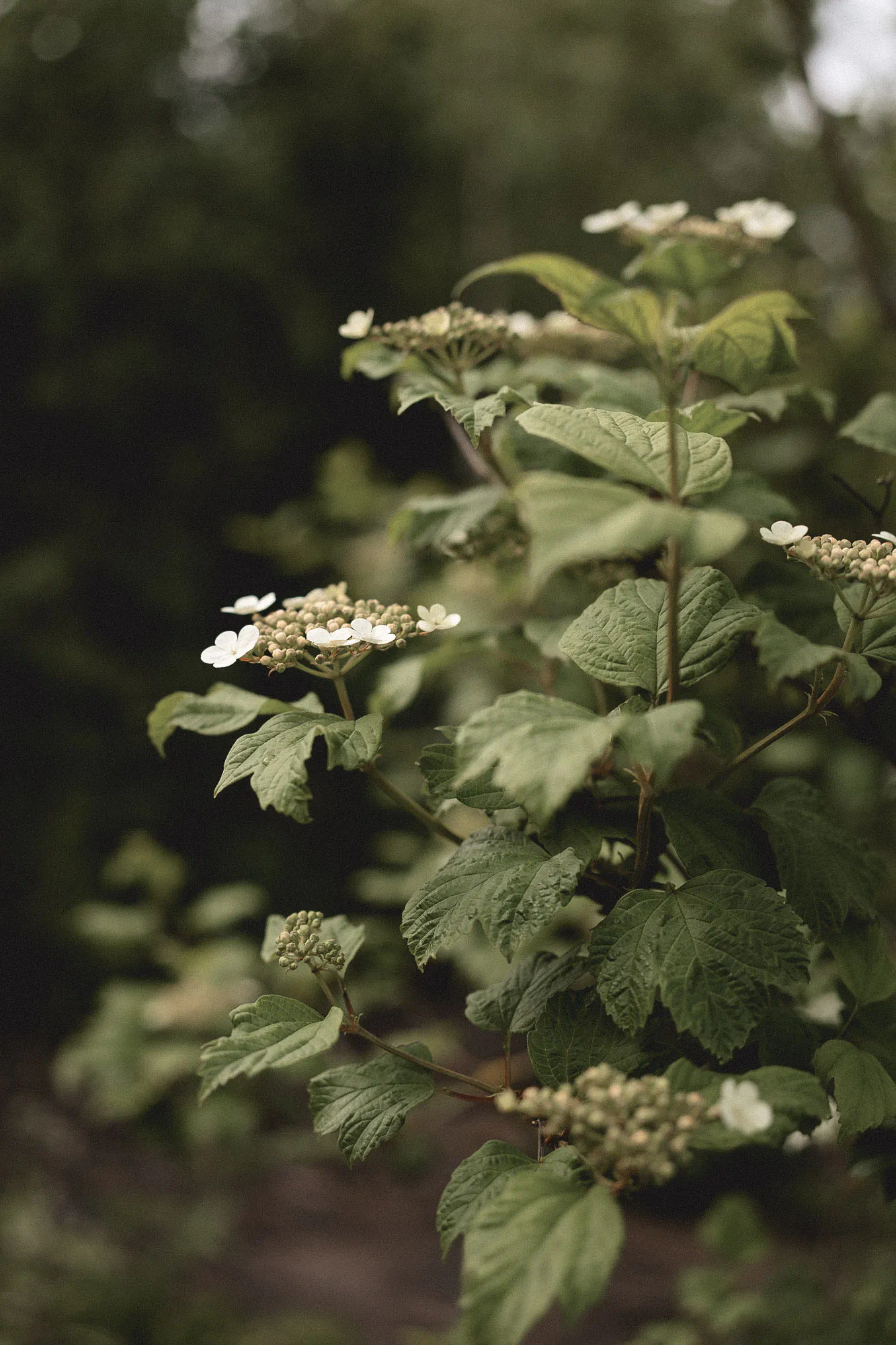
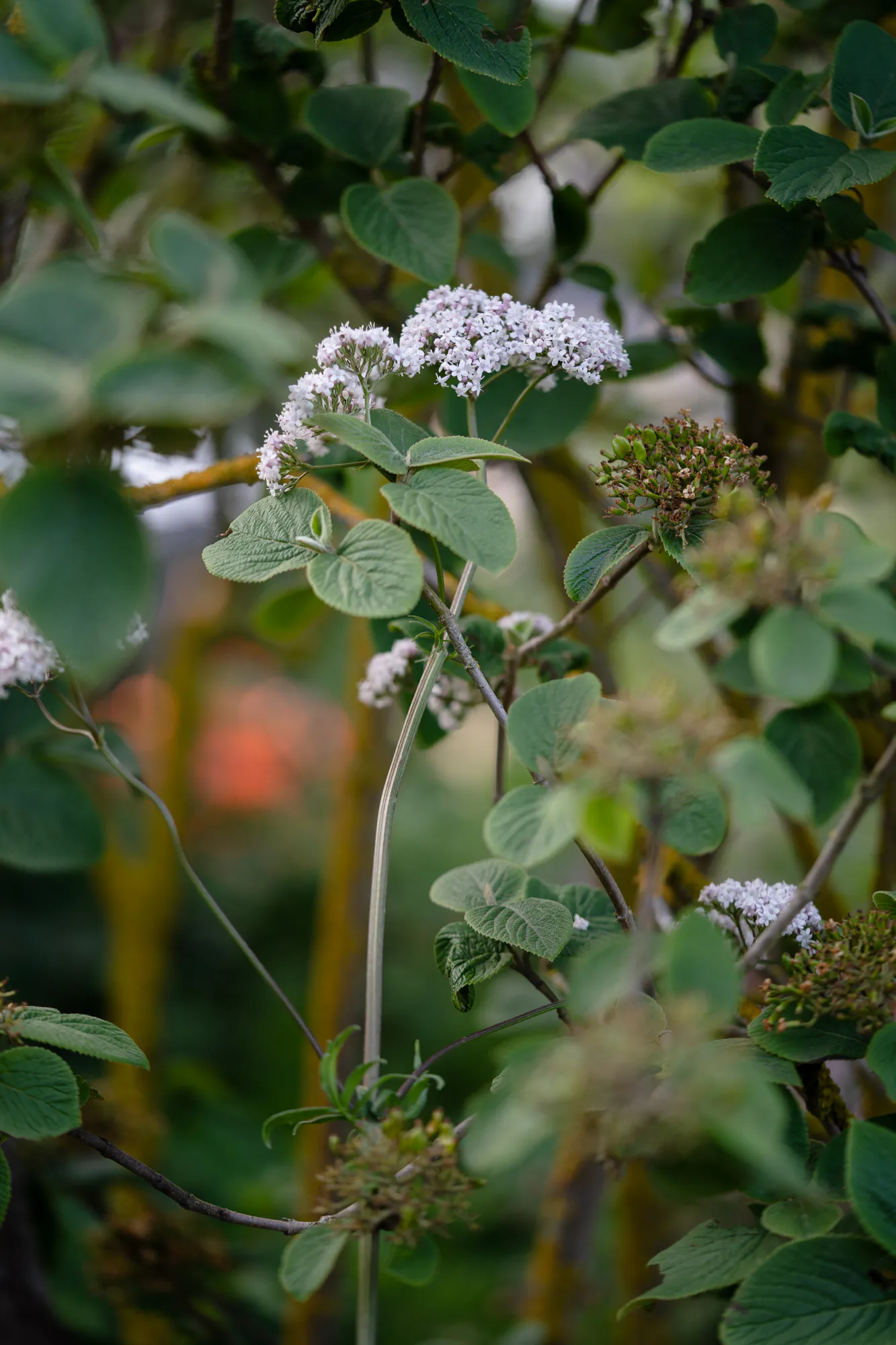
Guelder rose in flower, with white lacecap blooms
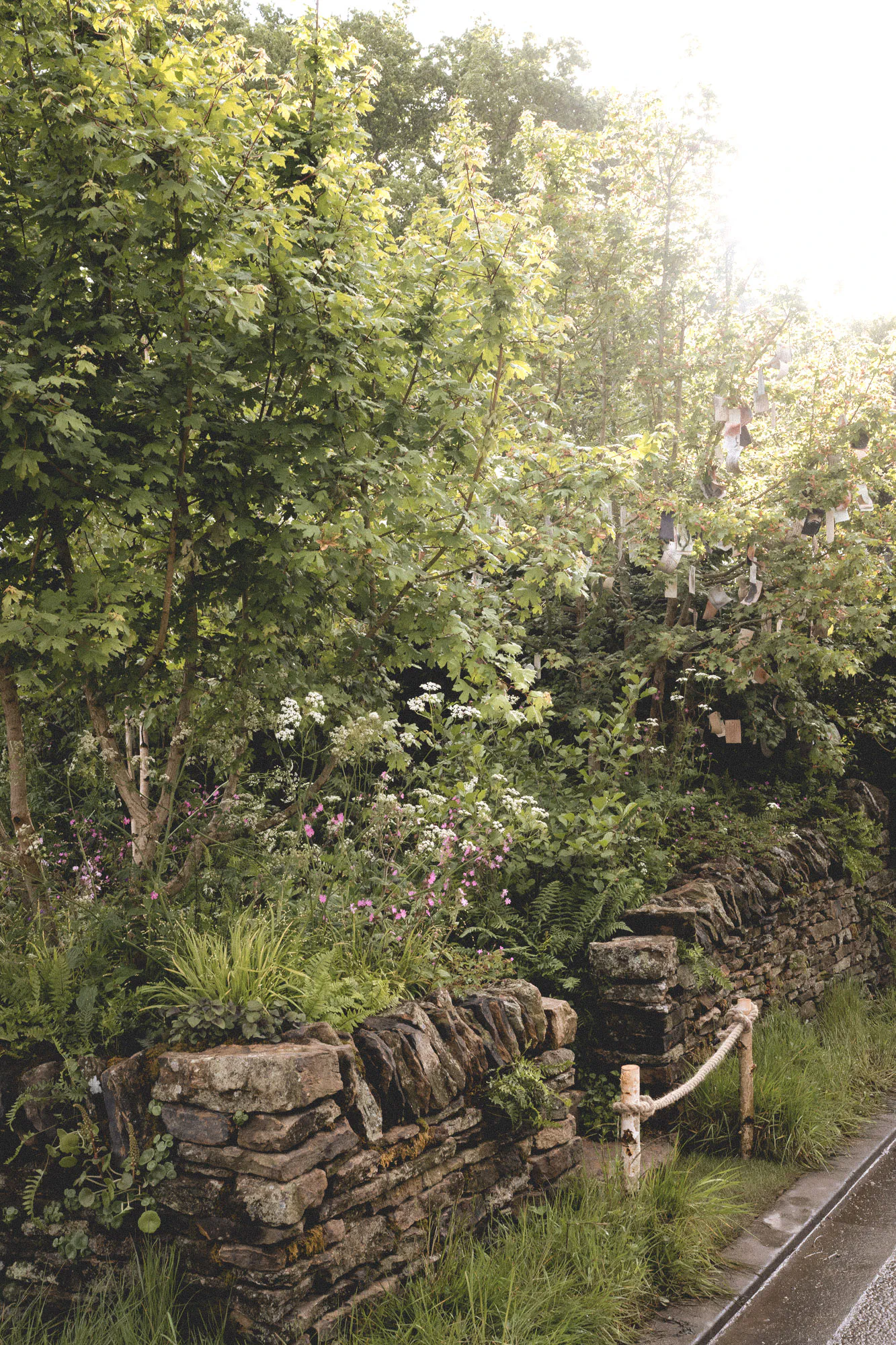
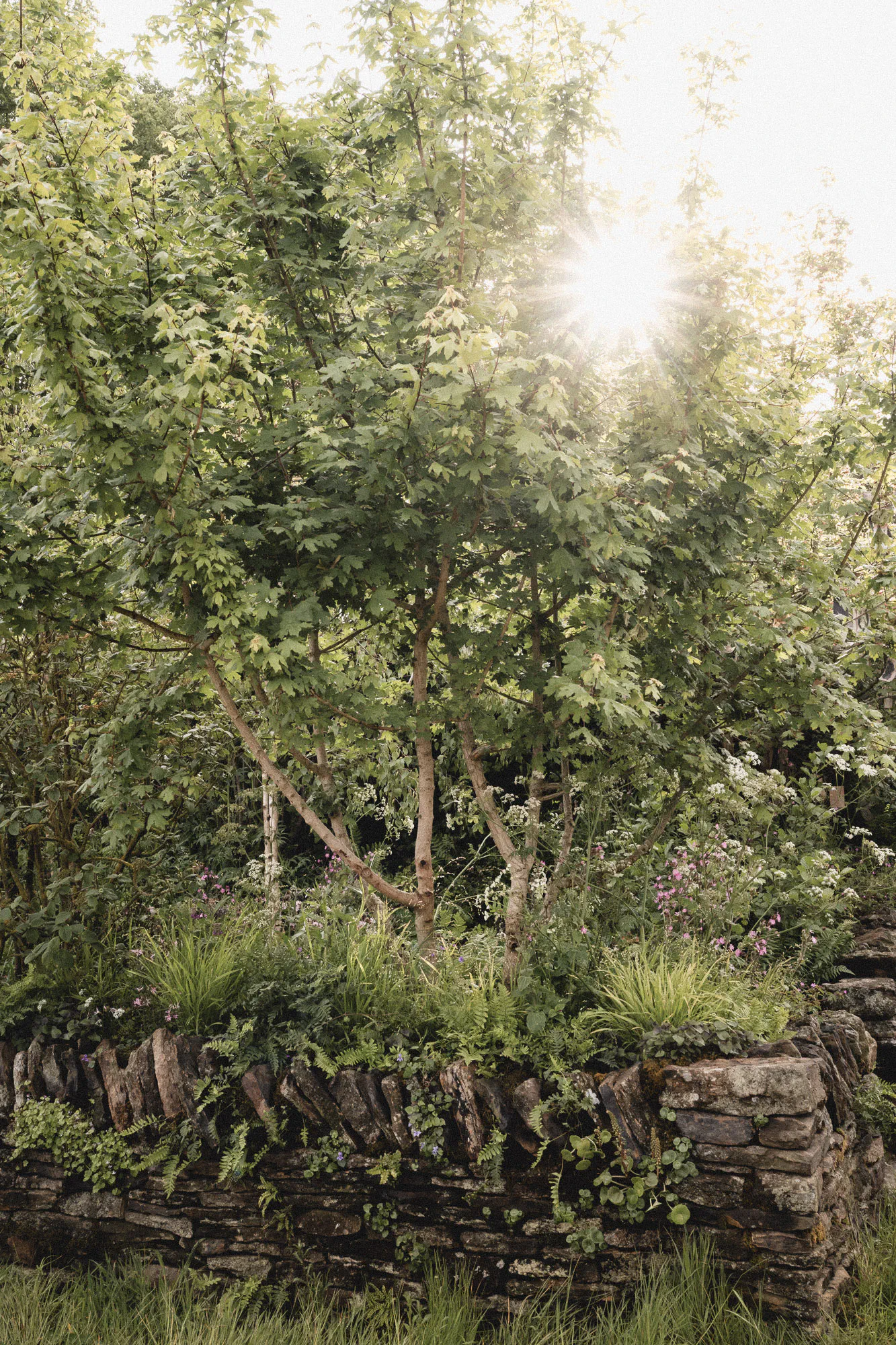
Field maples and woodland planting above gritstone dry stone walls, beside a step with a rope handrail
Carved timber chair and three-legged side table set among conifers and woodland planting
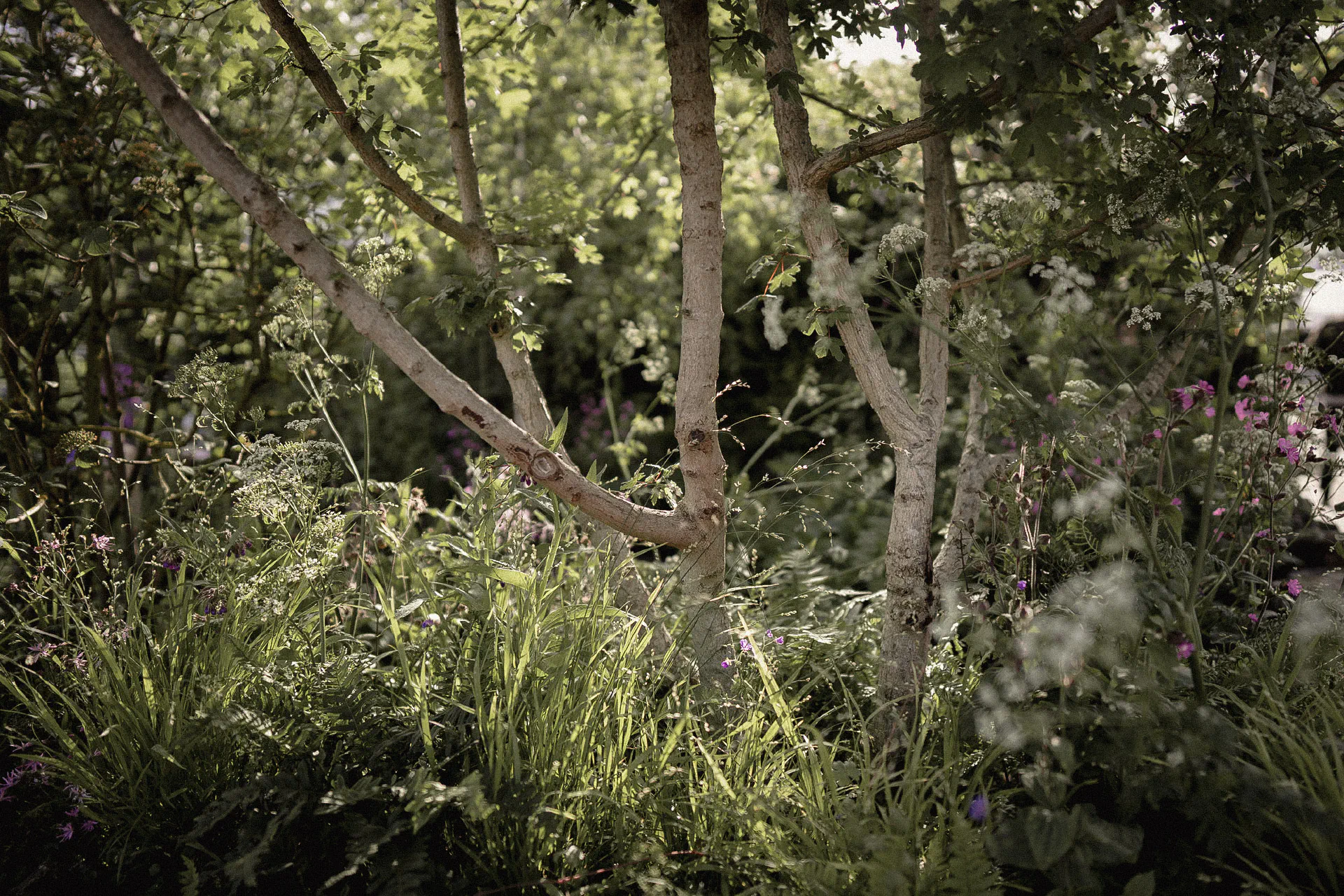
Multi-stemmed trees rising from grasses and woodland perennials in dappled light
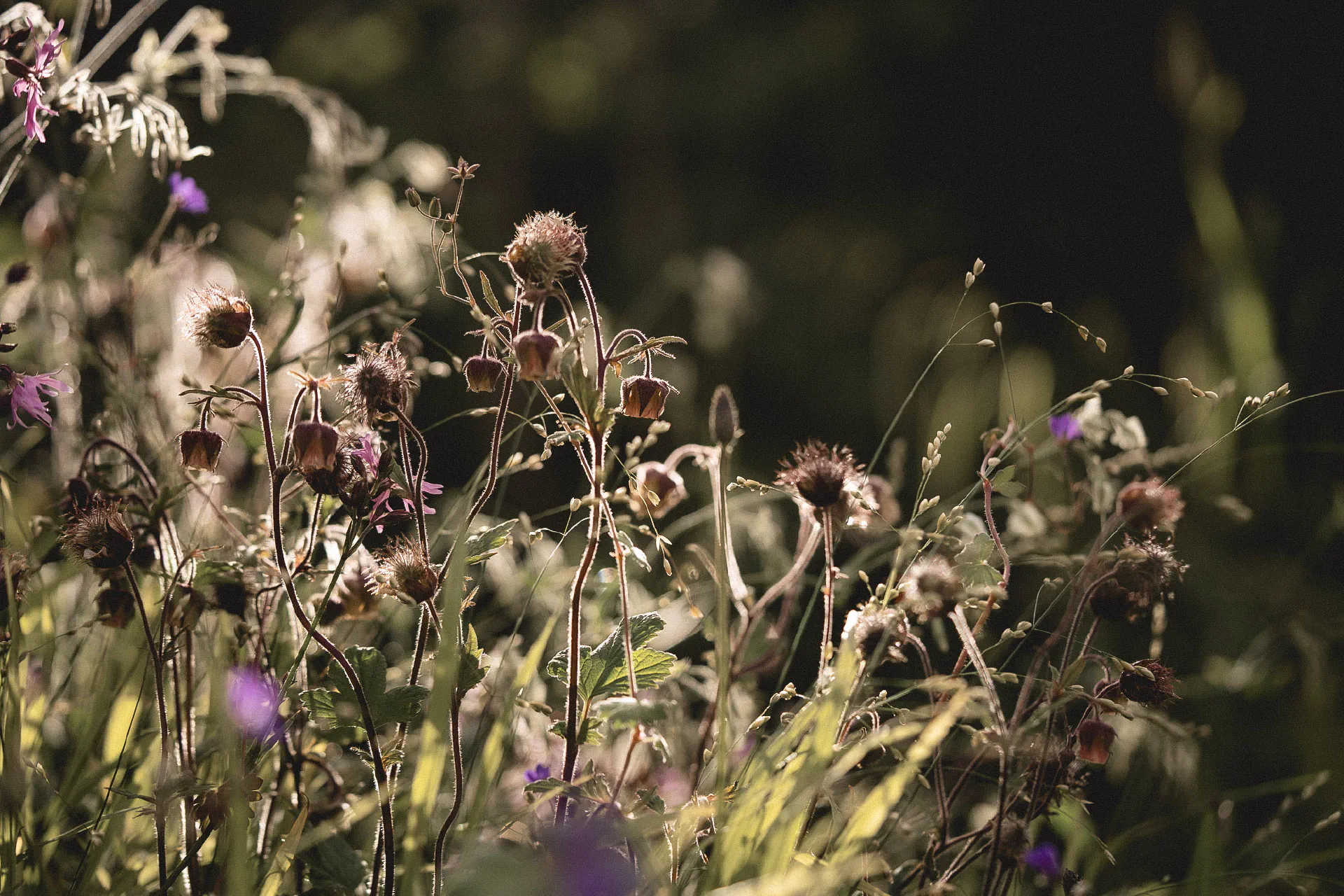
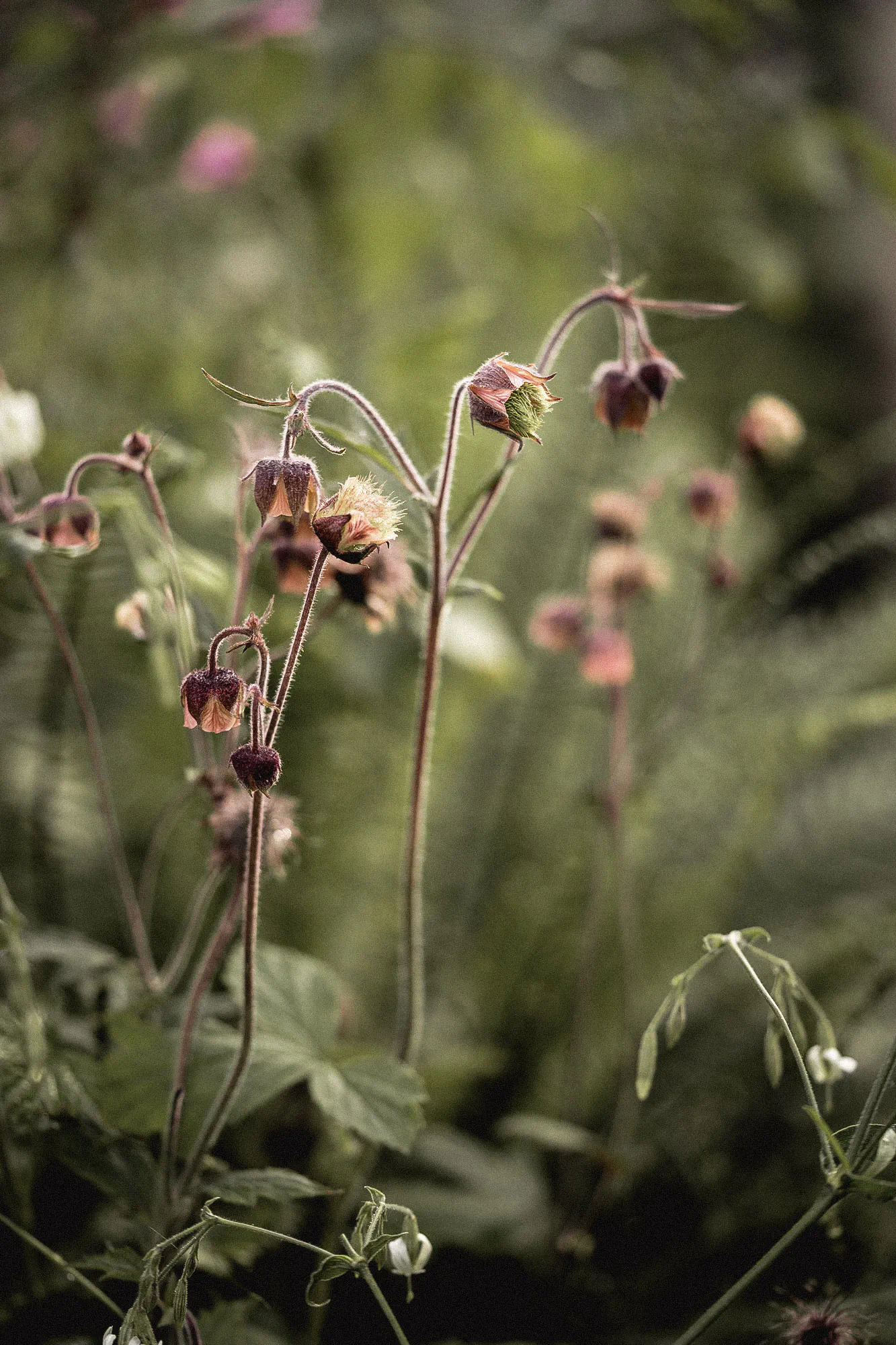
Water avens seed heads backlit against dark woodland
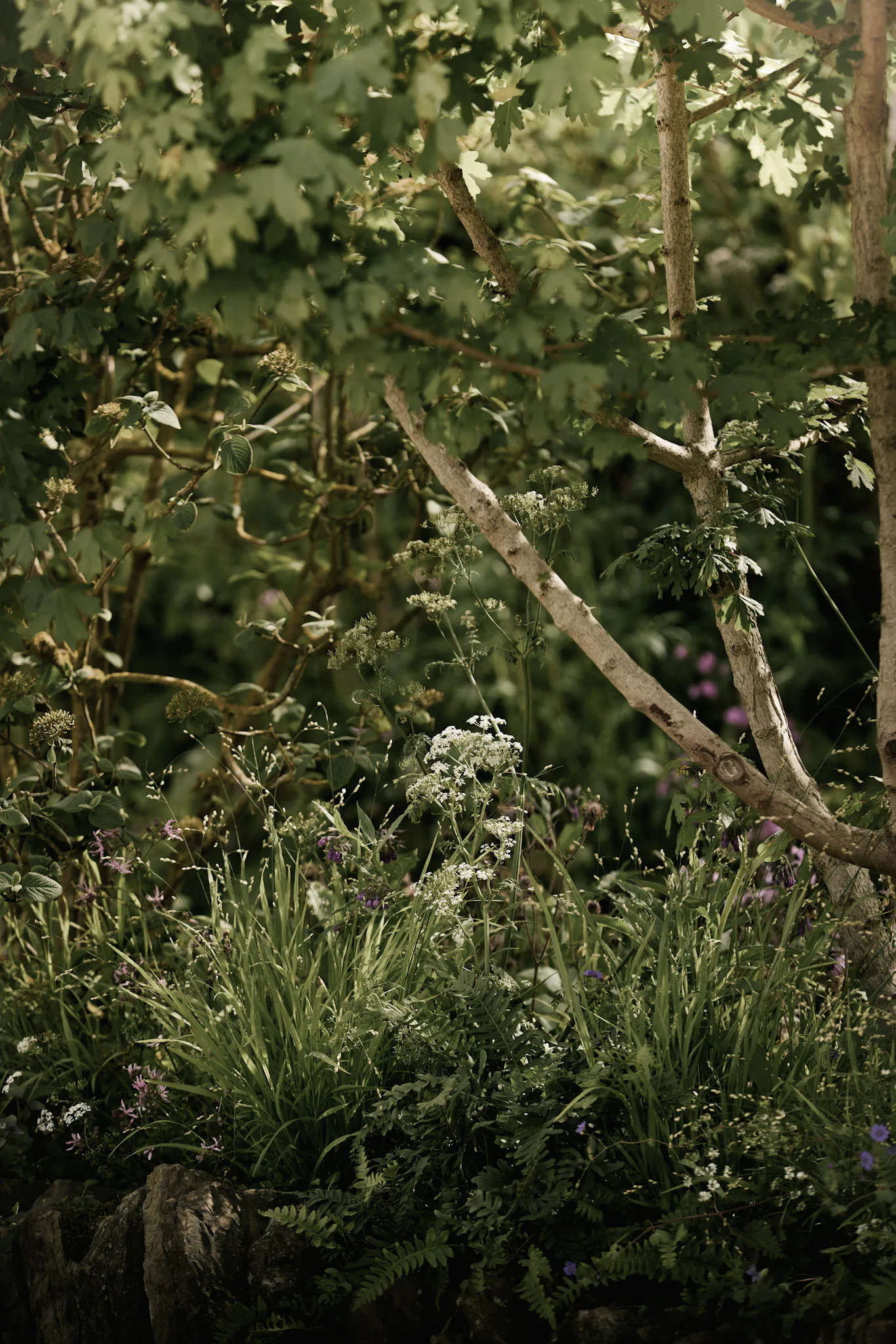
Field maple branches arching over cow parsley, grasses and ferns along a stone wall
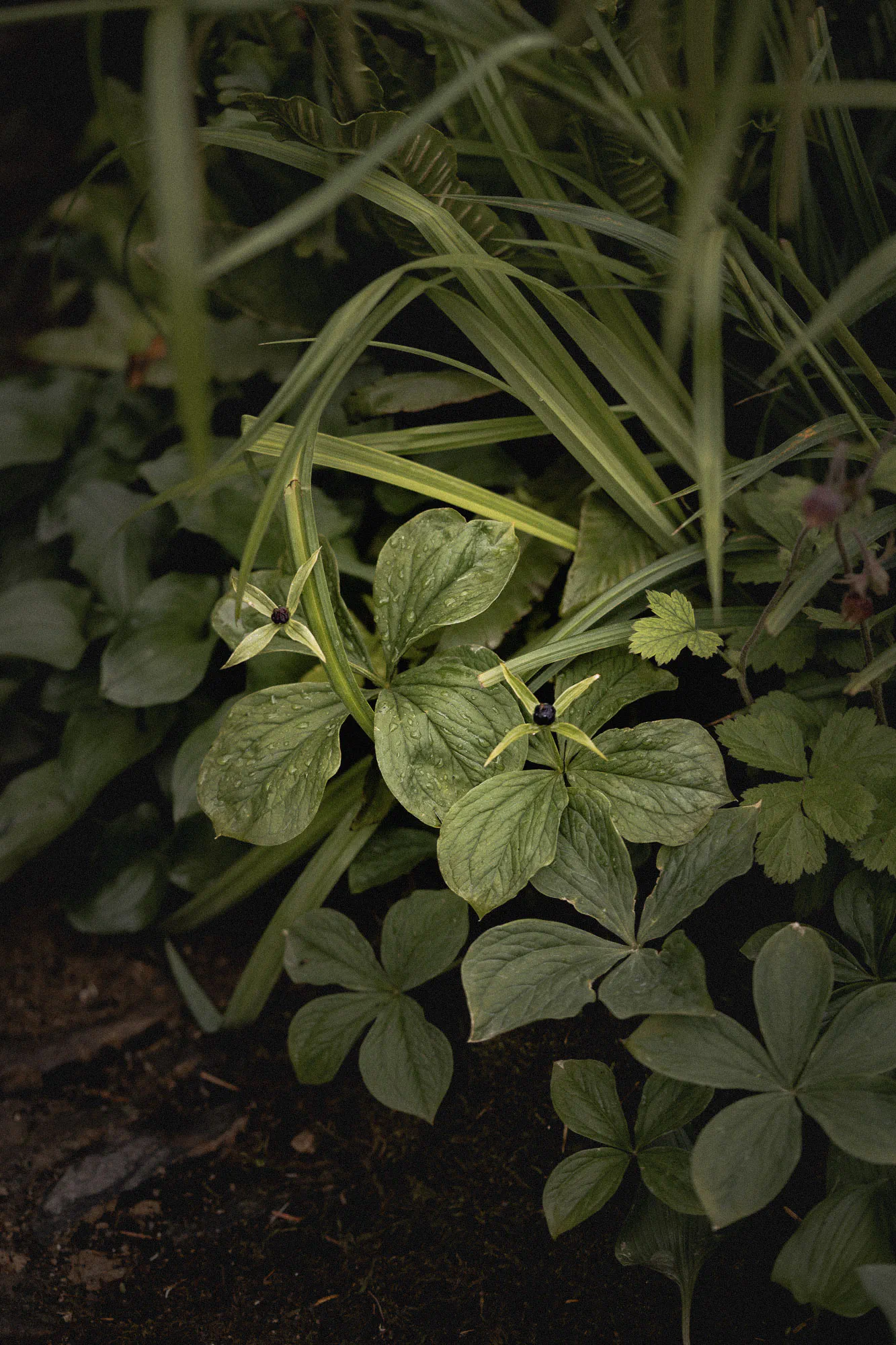
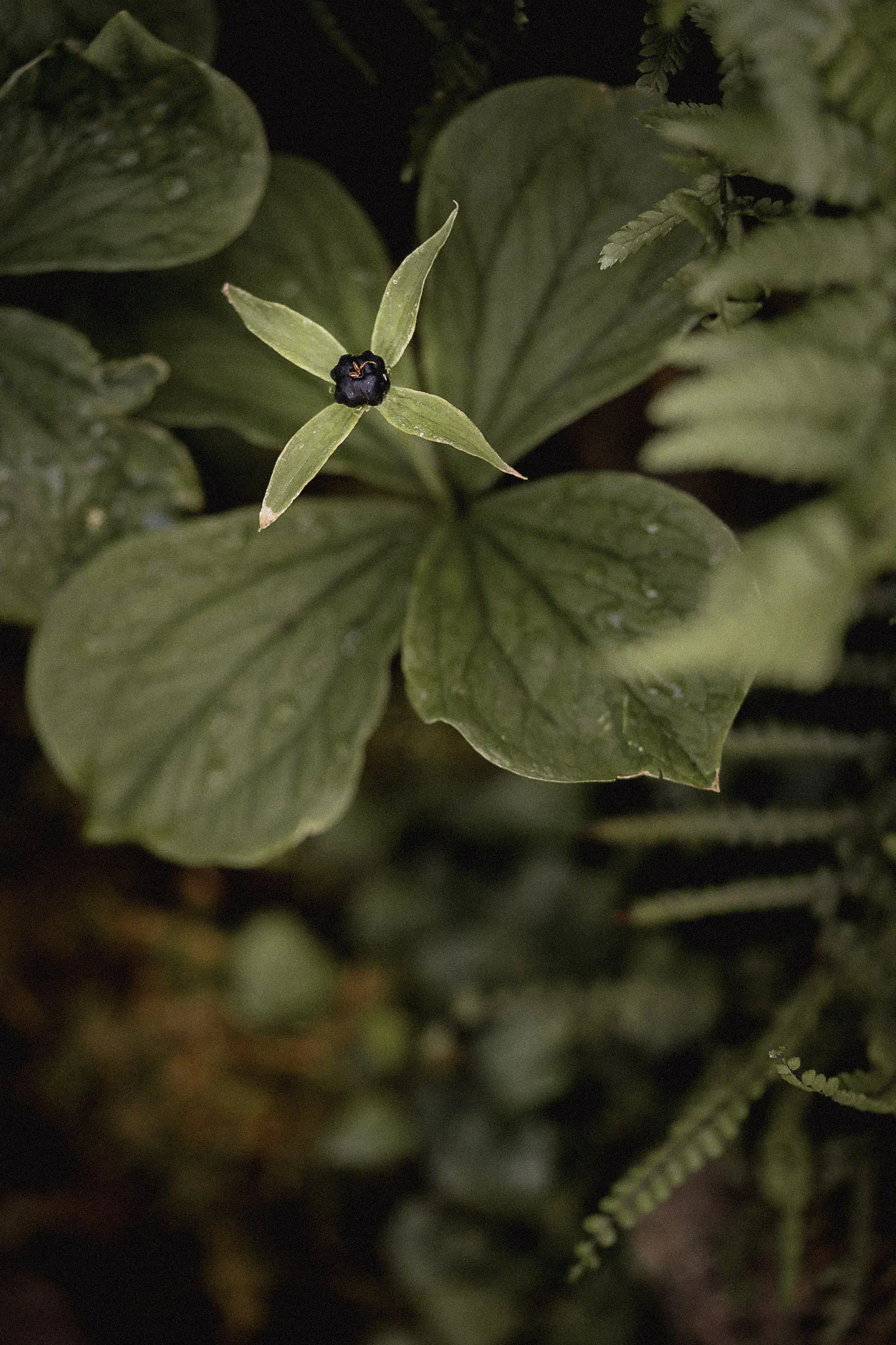
Herb Paris, an ancient woodland indicator, among sedges and woodland ground cover
Multi-stemmed field maple backlit by the sun above a gritstone wall planted with grasses and ferns
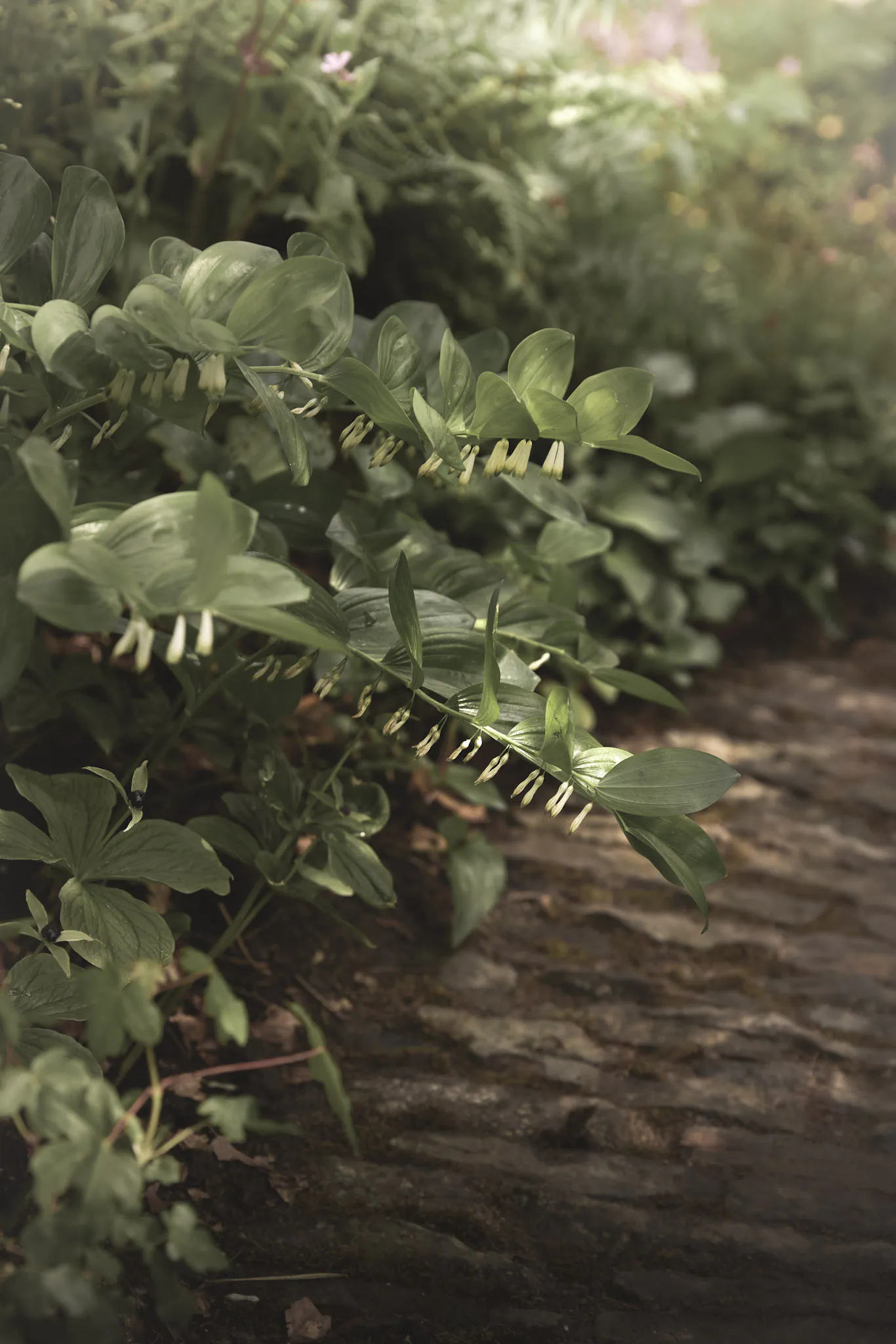
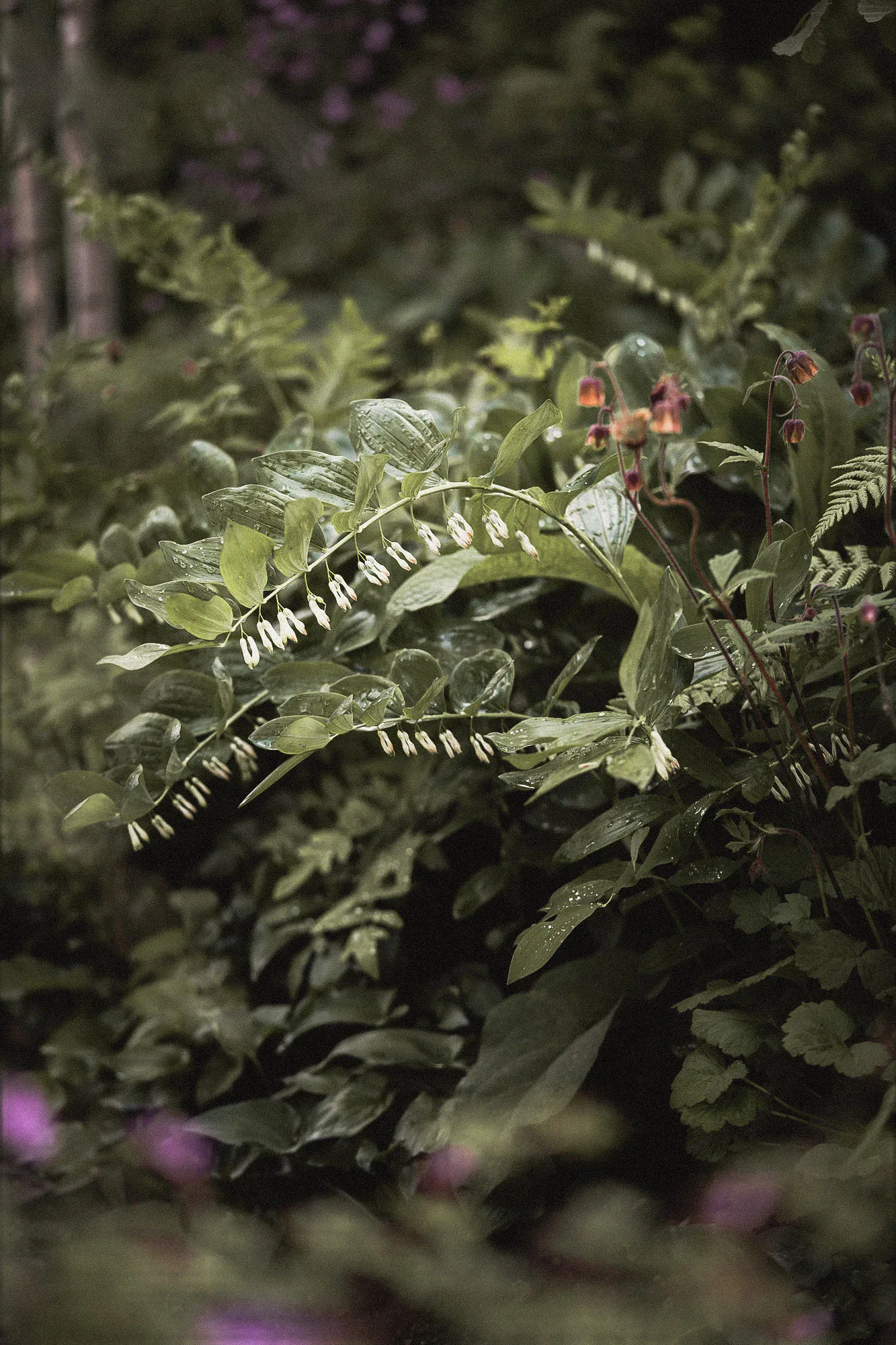
Solomon's seal arching over a gritstone path, its white bell flowers hanging beneath the leaves

III. Planting

The planting celebrates native woodland flora, with a particular focus on ancient woodland indicator species—plants that tell the story of long-established woodland landscapes and are increasingly threatened by woodland loss across the UK. Alongside trees and ground flora, the garden will also highlight lichens and mosses, vital yet often overlooked indicators of ancient woodland that are themselves under growing pressure.

For the first time at Chelsea, all trees within the garden were 100% sown and grown in the UK, underlining the critical importance of biosecurity in protecting our remaining ancient woodlands. By prioritising UK-grown plants, the garden demonstrates how thoughtful sourcing can help reduce the risk of introducing devastating non-native diseases such as Dutch elm disease and ash dieback.

Trees and shrubs

  • Field maple (Acer campestre)
  • Alder (Alnus glutinosa)
  • Silver birch (Betula pendula)
  • Hazel (Corylus avellana)
  • Wayfaring tree (Viburnum lantana)
  • Guelder rose (Viburnum opulus)

Ferns

  • Common polypody (Polypodium vulgare) 
  • Maidenhair spleenwort (Asplenium trichomanes)

Grasses, sedges, rushes

  • Wood melick (Melica uniflora f. albida)
  • Grey sedge (Carex divulsa)
  • Pendulous sedge (Carex pendula)
  • Quaking grass (Briza media)

Perennials

  • Ragged robin (Lychnis flos-cuculi)
  • Cow parsley (Anthriscus sylvestris)
  • Pignut (Conopodium majus)
  • Water avens (Geum rivale)
  • Red campion (Silene dioica)
  • Common valerian (Valeriana officinalis)
  • Meadowsweet (Filipendula ulmaria)
  • Common comfrey (Symphytum officinale)
  • Sweet woodruff (Galium odoratum)
  • Yellow archangel (Lamium galeobdolon)
  • False lily-of-the-valley (Maianthemum bifolium)
  • Herb paris (Paris quadrifolia)
  • Navelwort (Umbilicus rupestris)
Water avens with nodding dusky pink flowers
Guelder rose in flower, with white lacecap blooms
Red campion and cow parsley in flower
Herb Paris, a single dark berry above four broad leaves, beside fern fronds
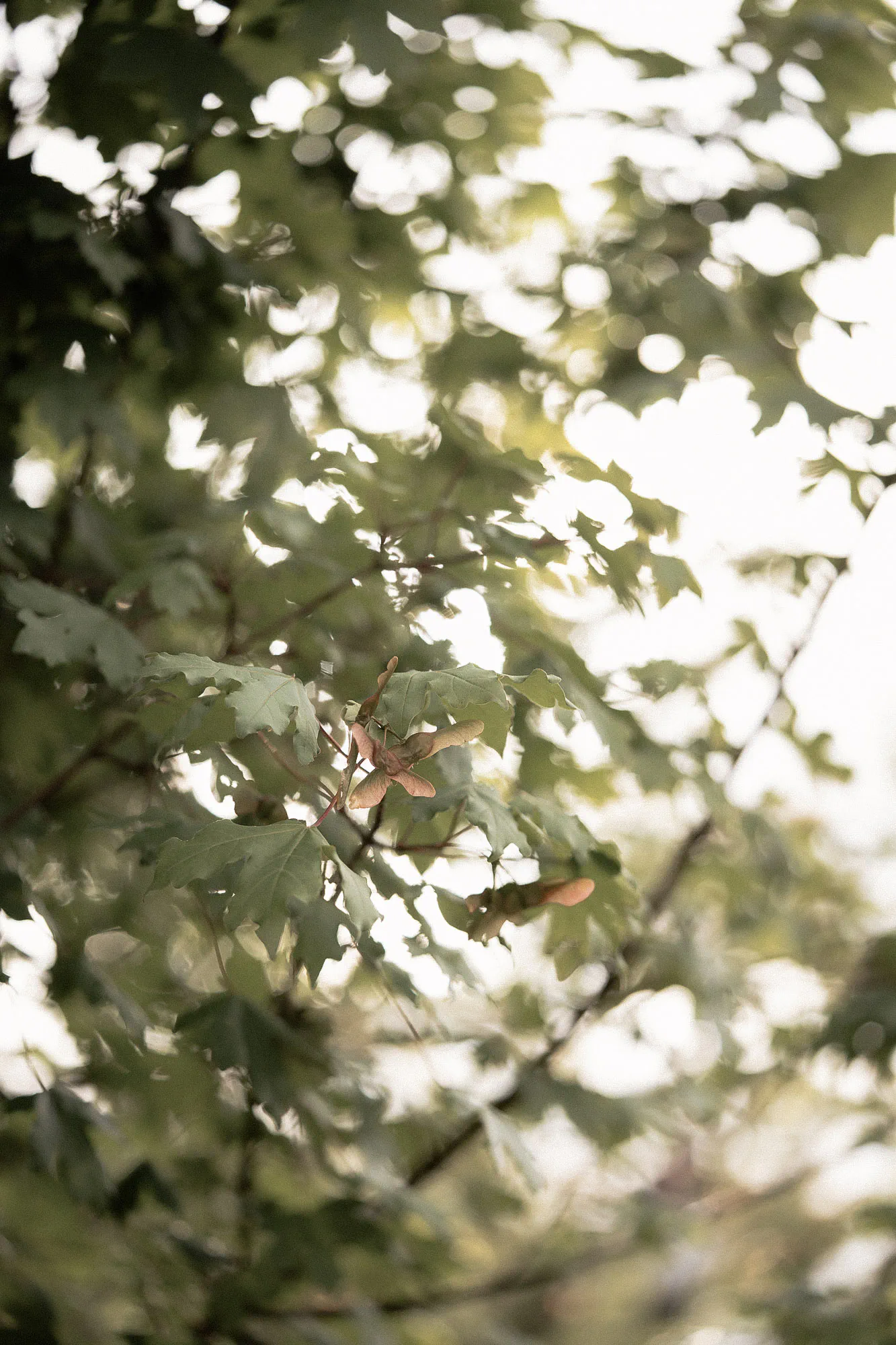
Field maple leaves and winged seeds against a bright sky
Solomon's seal and water avens among ferns in deep shade
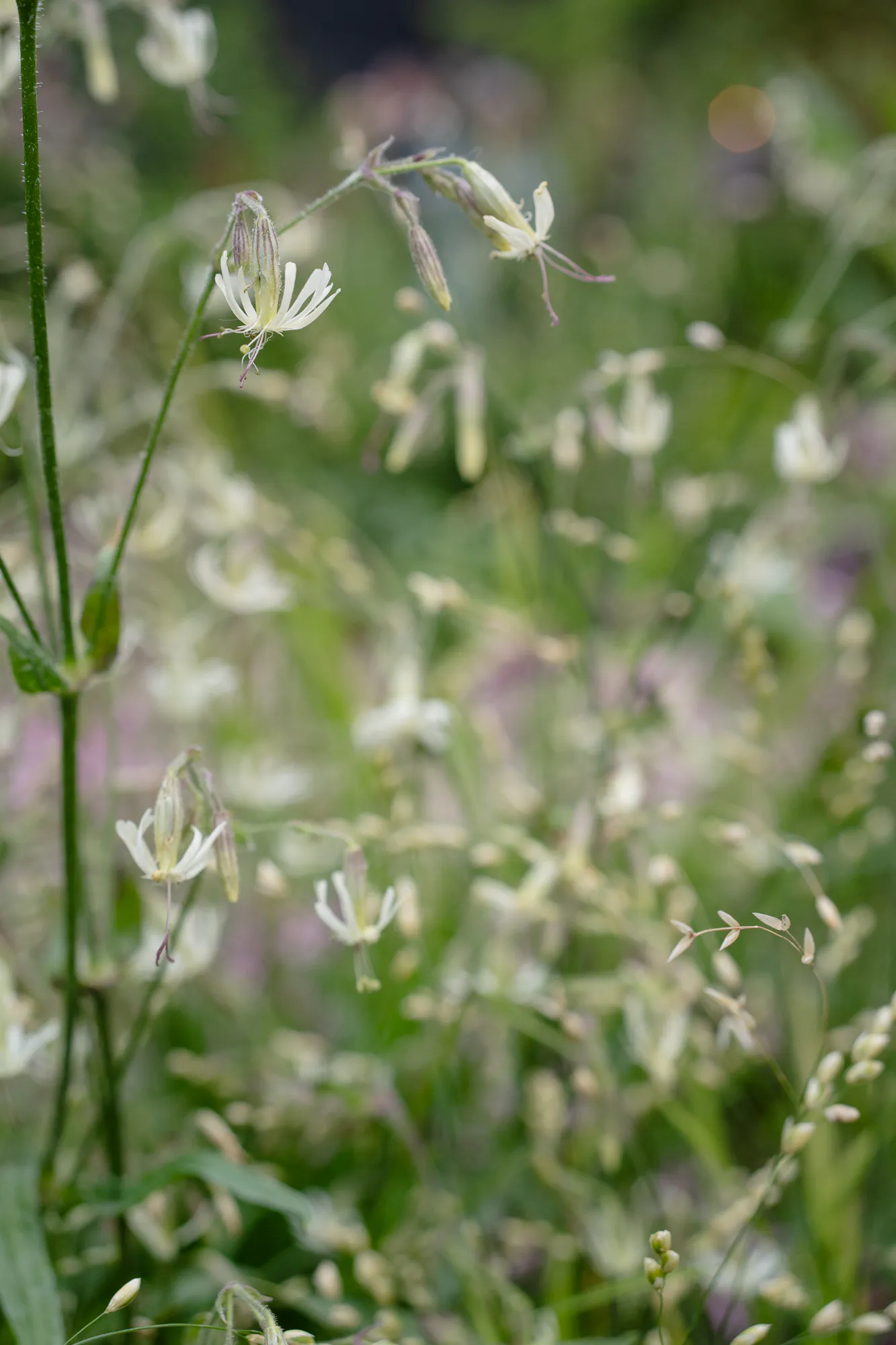
Nodding white catchfly flowers among fine woodland grasses
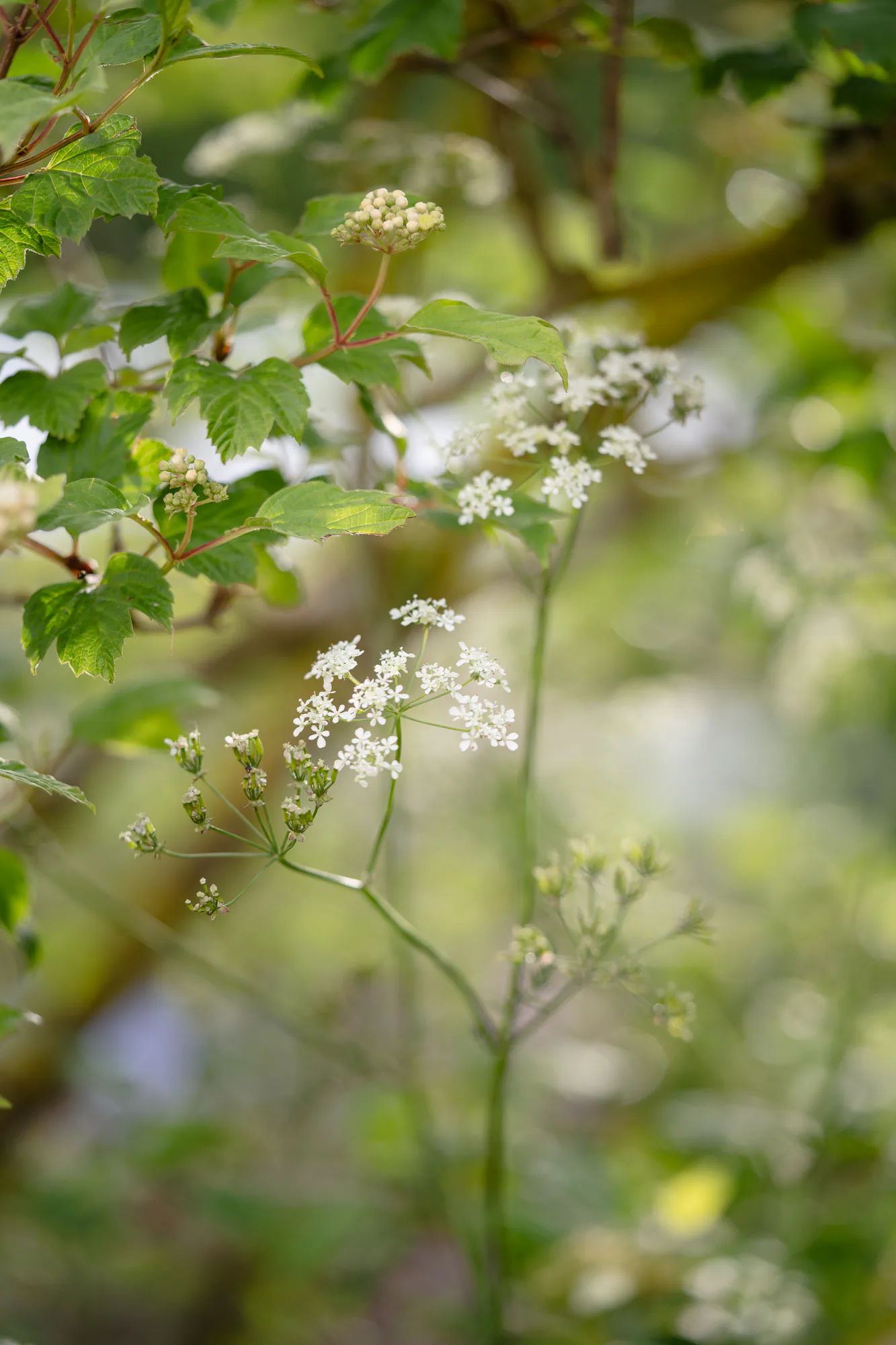
Cow parsley in flower beneath guelder rose leaves
Wayfaring tree in flower, with domed heads of small white flowers